

What Gets Lost When a Race Weekend Is Called Off
For most fans, the cancellation of the Saudi Arabian and the Bahrain Grand Prix was an inconvenience. For locals, it was the loss of something they had spent months building toward.

“The cancellation made everything going on more real.”
That is how Mony Turki, a motorsport fan born and raised in Jeddah, describes the moment the Saudi Arabian Grand Prix was officially called off. She had been holding onto the race weekend as a fixed point of normality amid a time of conflict in the region. It was a date in the calendar that felt solid when much else did not. When it disappeared, so did that anchor.
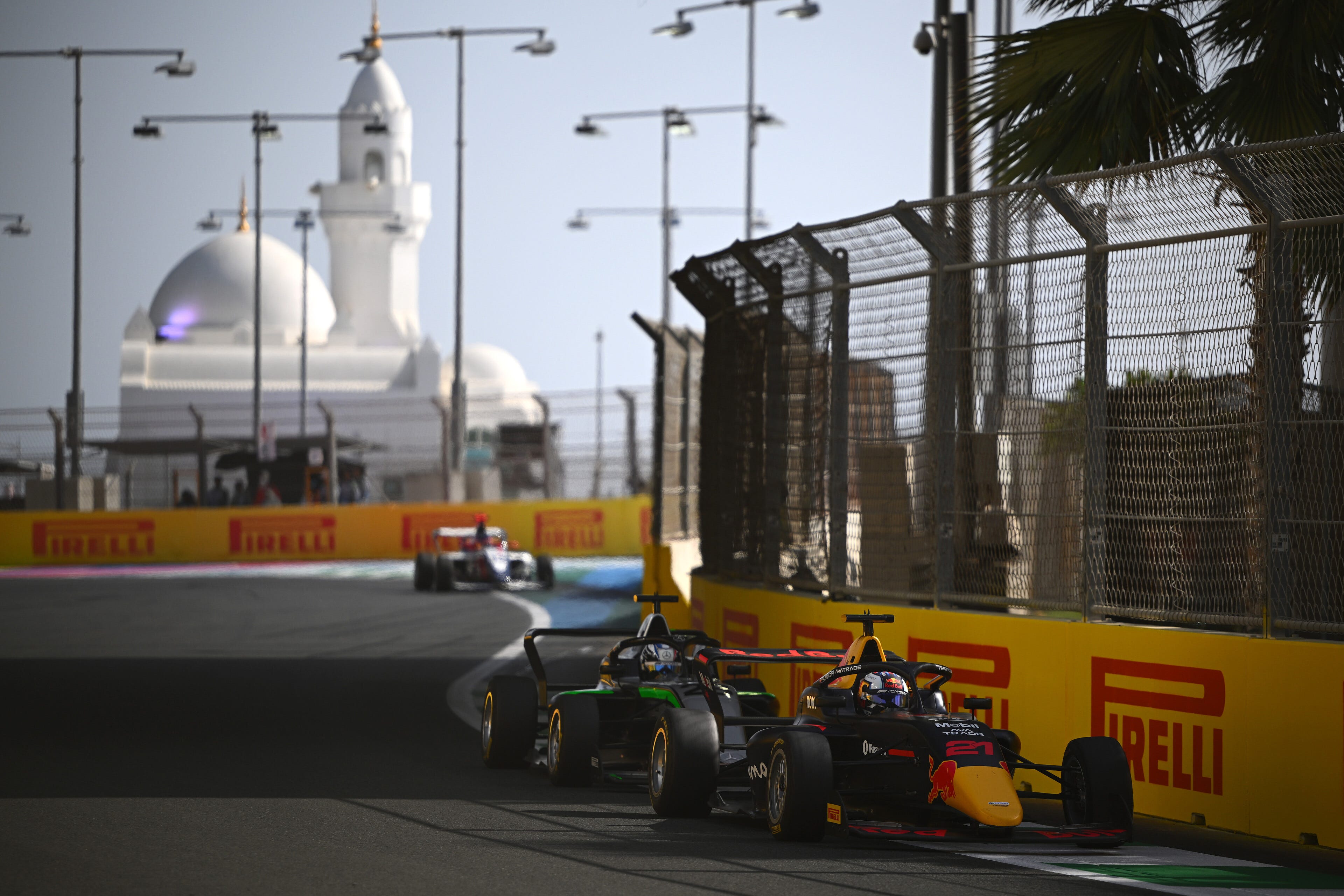
The 2026 Saudi Arabian Grand Prix had been scheduled to run from April 17 to 19 at the Jeddah Corniche Circuit, marking Round 5 of the Formula 1 season and Round 2 of the F1 Academy championship. Just over a month before, Formula 1 confirmed that neither it nor the Bahrain Grand Prix would go ahead. Airspace restrictions and closures across the Middle East and Gulf region, combined with the security risks involved in transporting the vast logistical infrastructure required for a Formula 1 weekend, made the decision, in the end, unavoidable. The Formula 2, Formula 3, and F1 Academy rounds scheduled for both weekends were cancelled alongside them.
“While this was a difficult decision to take, it is unfortunately the right one at this stage,” said Stefano Domenicali, President and CEO of Formula 1, in the official statement.
Nobody serious is arguing otherwise. But the right decision and the painless decision are rarely the same thing.
Jeddah was more than ready
Saudi Arabia’s second-largest city sits along the Red Sea — known locally, with some affection, as the Bride of the Red Sea — and it carries that energy into everything it does, including race week. The Jeddah Corniche Circuit is one of the fastest street circuits on the Formula 1 calendar, threading along the waterfront at speeds that make it unlike almost anywhere else the championship visits. The city doesn’t make much effort to be understated, and neither does its Grand Prix.
“Jeddah feels like a warm hug,” Mony says. “And its people are the friendliest, most welcoming, loving people you’ll ever meet. It may be a big city, but it feels like a small community where everyone knows everyone.”
The race had grown, over five editions, into something considerably more than a sporting event. Last year, Saudi Arabia won the award for Best Event Spectacle among all Formula 1 rounds, and this year was set to surpass even that. Shakira, Pitbull, Kygo, Tyla, and Marwan Moussa had been confirmed as headliners for the trackside concerts. The grandstands, Mony tells us, were already going up. The support garages were in the process of being built. The city, in every practical sense, was ready.
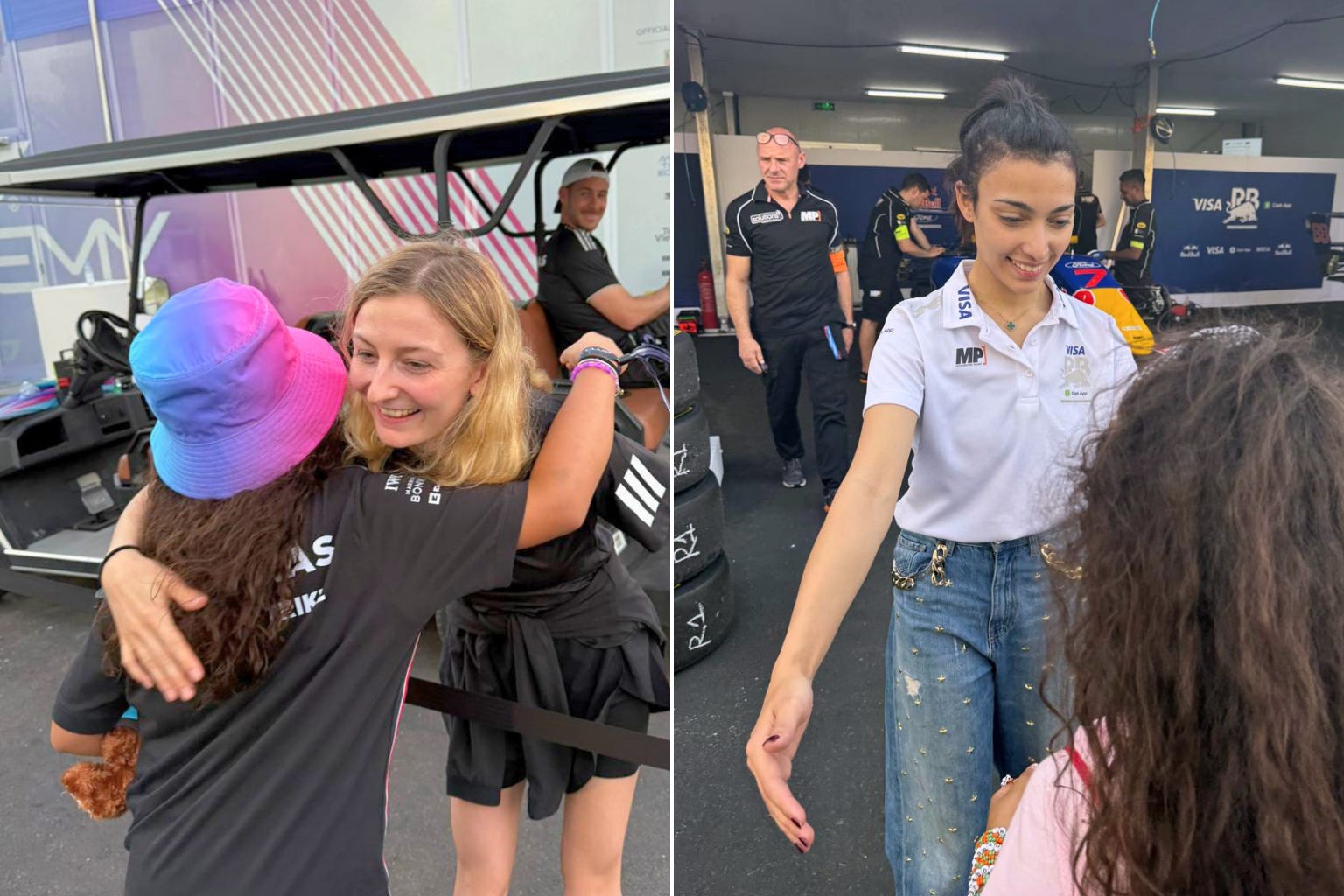
What made this particular round meaningful for F1 Academy fans went beyond the headline acts. Unlike many rounds on the calendar, the F1 Academy paddock in Saudi Arabia operates as an open paddock, being genuinely accessible without the tiered credentials that gate off so much of the sport’s inner world. Younger fans could walk in, stand close to the cars, speak to drivers not much older than themselves, and leave with something harder to quantify than a photograph: the sense that the distance between aspiration and reality is shorter than it appears. “Preparations were pretty far along,” Mony says. “Everyone was ready and excited.” That excitement, when it had nowhere to go, became something heavier.
Gigi, another Jeddah-born-and-raised local fan and content creator, points to something broader still.
“This isn’t just about one event not happening,” she says. “It’s about momentum. Motorsport is growing quickly here, and every event adds to that. When something gets pulled, it slows that progress — even if temporarily.”
The true cost of cancelling a Grand Prix
Formula 1 has lived through this before, though never quite comfortably. In March 2020, the Australian Grand Prix was called off on a Friday morning, hours before first practice, as it became clear that a McLaren team member had tested positive for Covid-19 and the pandemic could no longer be managed around a race weekend. By the time the decision was made, around AUS $50 million had already been spent on the event.
In 2022, the Russian Grand Prix was terminated in the immediate aftermath of the invasion of Ukraine, swiftly and without hesitation, though the financial dispute between Formula 1 and the Russian promoter over who owed what to whom dragged on for years. And in May 2023, the Emilia Romagna Grand Prix was cancelled mid-week as catastrophic flooding overwhelmed the region around Imola; the race’s hosting fee, understood to be around $20 million, was waived under force majeure, and Formula 1 donated a further million euros to the regional relief effort.
Each of those cancellations left its own particular shape of damage. What they share is a financial and human cost that tends to disappear into the administrative language of official statements.
The numbers involved in Jeddah are considerably larger. Jeddah’s hosting fee is among the highest on the calendar, and that is before accounting for the revenue Formula 1 loses from trackside sponsorship activations, hospitality packages, broadcasting adjustments, and the commercial infrastructure that makes a Grand Prix weekend function. Both the Saudi and Bahraini events attract substantial corporate hospitality demand, and that world, invisible to most fans, represents a significant portion of the sport’s commercial ecosystem. The combined financial impact of the two cancellations is expected to run well beyond $100 million.
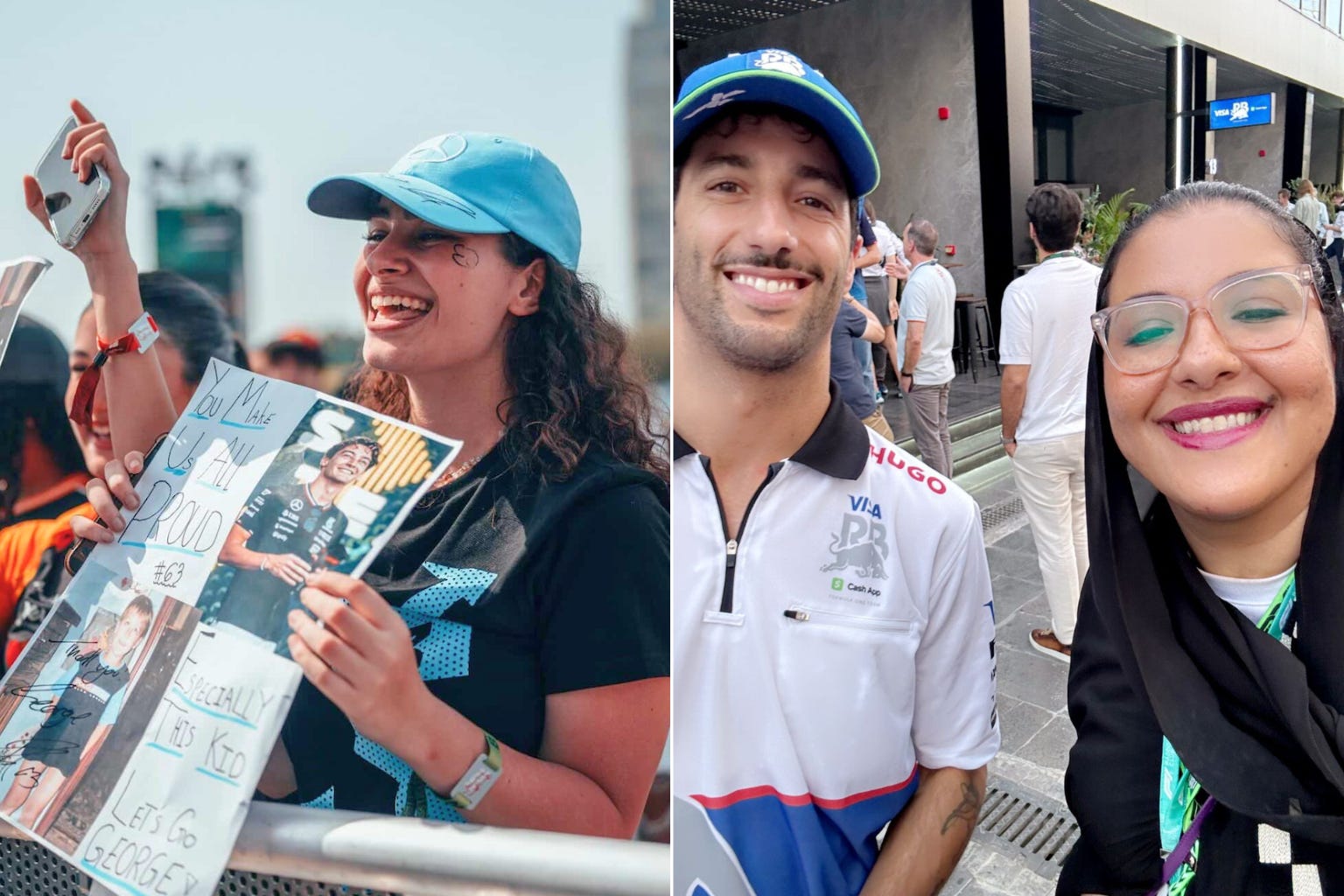
But it is not all about money, and perhaps the more important truth is that the financial figures, large as they are, do not capture what a cancellation actually takes from the people who were preparing to live it. For Mony, the personal impact was immediate and specific. “I had so many plans,” she says. “So many friends were coming in for the race, and I made a lot of new friends via the local community. We all had so many plans for that weekend.”
Those plans did not entirely disappear — the local community in Jeddah is now organising to mark the weekend together anyway, a quiet act of loyalty to something they love. But the shape of the weekend has changed entirely.
“It wasn’t just the plans that disappeared,” Gigi says. “It was the whole build-up and excitement that came with it.”
The part that isn’t being said
For fans watching from outside the region, the cancellation registers primarily as an inconvenience: a gap in the calendar, a shift in the schedule, a longer wait until Miami. That response is understandable. For most of its global audience, Formula 1 fandom experiences the season at a distance, and the season's rhythms matter. But Mony is direct about what gets lost in that framing.
“A lot of people forget the human aspect of it,” she said. “We saw a lot of complaints about how people are mad that they’re not going to have a race in April, with no consideration for the people that are actually affected by the situation.”
Day-to-day life in Jeddah has not changed dramatically in the ways that might be imagined from abroad. The city is not the conflict. But the mental weight of proximity is real, and the cancellation sharpened it. “It’s been a bit somber,” Mony says. “Everyone was so excited for the race. Mentally, it’s taken a toll on a lot of people.”
For Gigi, it is more of a quiet disappointment. “People aren’t making a big scene about it, but you can tell it affected the vibe. Conversations shifted, and that excitement kind of faded instead of building,” she says. The distinction between physical disruption and emotional weight is easy to lose from a distance. It is worth slowing down enough to register it.
What happens to F1 Academy
For Formula 1, absorbing a calendar gap, however costly, is a structural inconvenience. For F1 Academy, the mathematics is harsher. The series competes on a smaller canvas, with fewer rounds and less margin for loss. Every race represents competitive track time that cannot easily be recovered, and for drivers whose careers are still being built, the cumulative effect of fewer opportunities is not trivial.
However, F1 Academy responded quickly and creatively. Earlier this month, the series announced the introduction of a new three-race weekend format at two upcoming rounds — the Canadian Grand Prix in Montreal and the Circuit of the Americas in Austin — adding a brand new Opening Race to the existing Reverse Grid Race and Feature Race. The change restores the calendar to 14 races.
The Opening Race will be set using each driver’s second-fastest qualifying time, adding a strategic dimension to the sole 30-minute qualifying session: drivers will need to produce not one but two strong laps, with full championship points on offer. It is a format that rewards consistency under pressure, and it emerged from close collaboration between F1 Academy and the promoters in Montreal and Austin, whose willingness to make space for additional track time has shaped what the replacement rounds can be.
“Introducing the Opening Race at select rounds underscores our commitment to building a platform where the most talented can thrive by maximising competitive track time,” said Susie Wolff, Managing Director of F1 Academy.
It is a considered response to an impossible situation — more racing, more visibility, more opportunity for drivers who deserve the chance to be seen.
Will F1 Academy return to Jeddah?
The locals hope so. Both Mony and Gigi are clear about why it matters, and about what is at stake in the question.
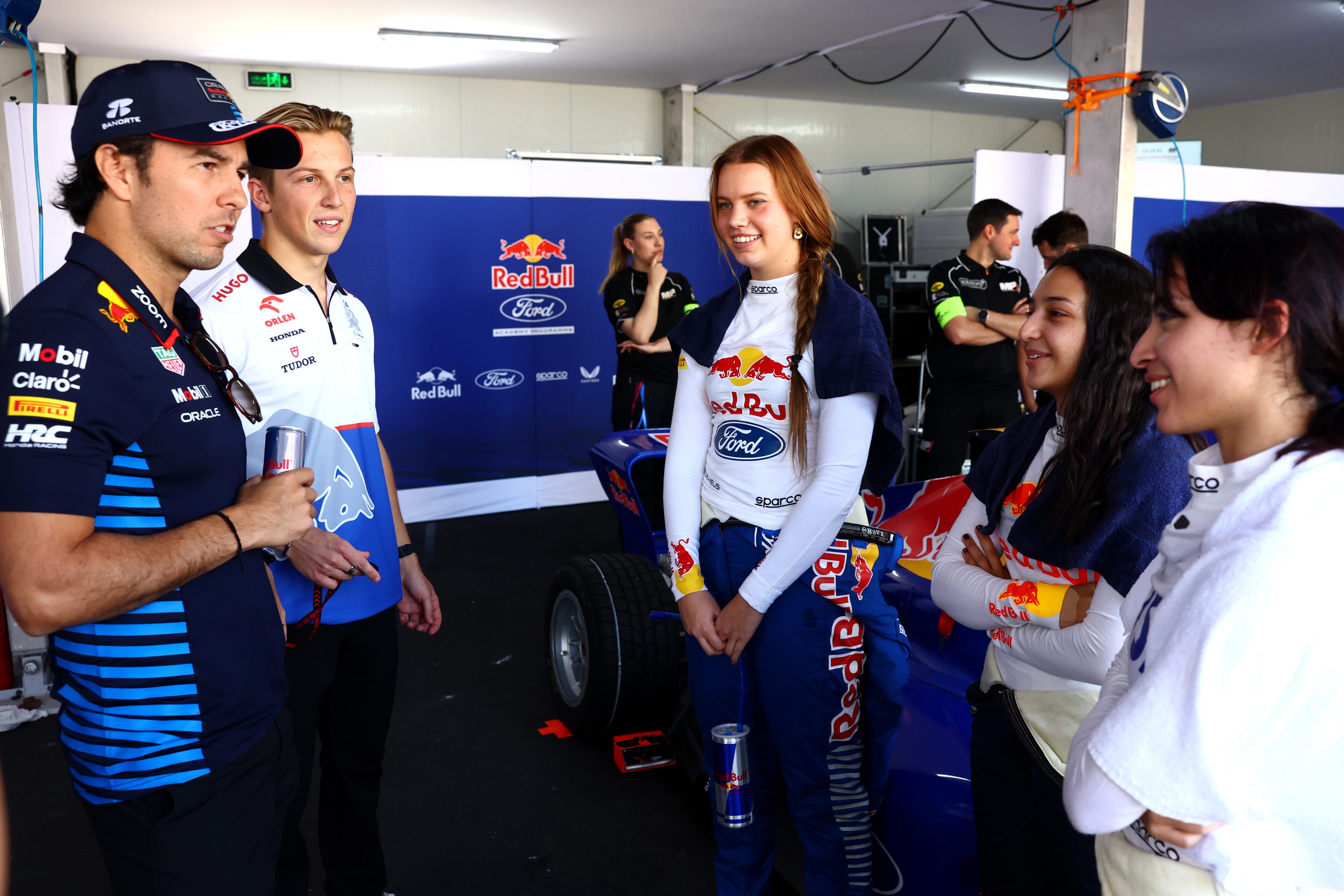
“We absolutely love F1 Academy here,” Mony said. “I love seeing not only girls, but even boys, being inspired by the amazing ladies behind the wheel.”
That image — young fans in an open paddock, standing close enough to feel the weight of the sport, watching drivers who are their own age competing on the world’s biggest stage — is exactly what F1 Academy was built to create. It is the kind of experience that cannot be replicated through a screen, and it is precisely the kind of experience that Jeddah, with its open paddock and its gift for hospitality, delivers particularly well.
“I do think it can come back, and it should,” Gigi says. “It represents growth and inclusion in motorsport here. If it didn’t return, it would feel like a missed opportunity — not just for fans, but for the region’s presence in the sport.”
Both the Saudi Automobile and Motorcycle Federation and the Saudi Motorsport Company have affirmed their commitment to the partnership with Formula 1 and their readiness to welcome the sport back as soon as circumstances allow. The Saudi contract runs until 2030, and the infrastructure, the appetite, and the community that has grown around the race are all still there, waiting.
But a conflict is not a weather event. It does not pass in a week, leave its damage visible on a map, and recede. What comes next for the region is uncertain in ways that no contract term can resolve. The sport will, eventually, have to ask itself whether its return to Jeddah, when it comes, is driven by genuine confidence in the safety of everyone involved, or by the pull of a hosting fee that ranks among the largest on the calendar. The grandstands can go back up quickly. Whether the sport returns for the right reasons is a question worth sitting with considerably longer.