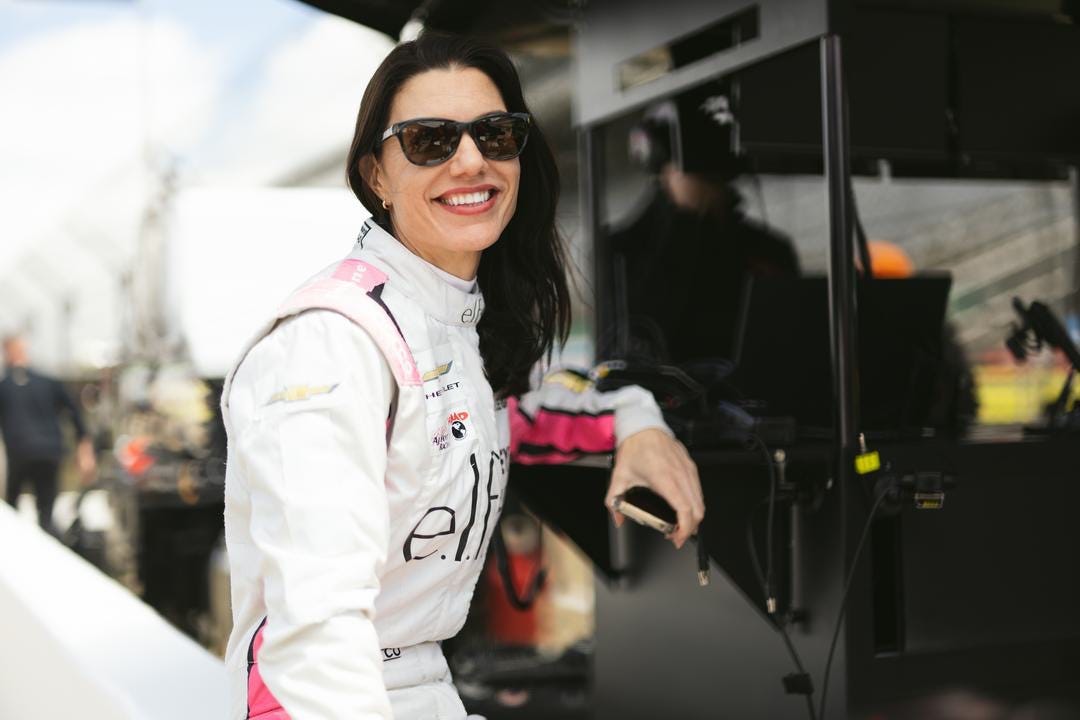


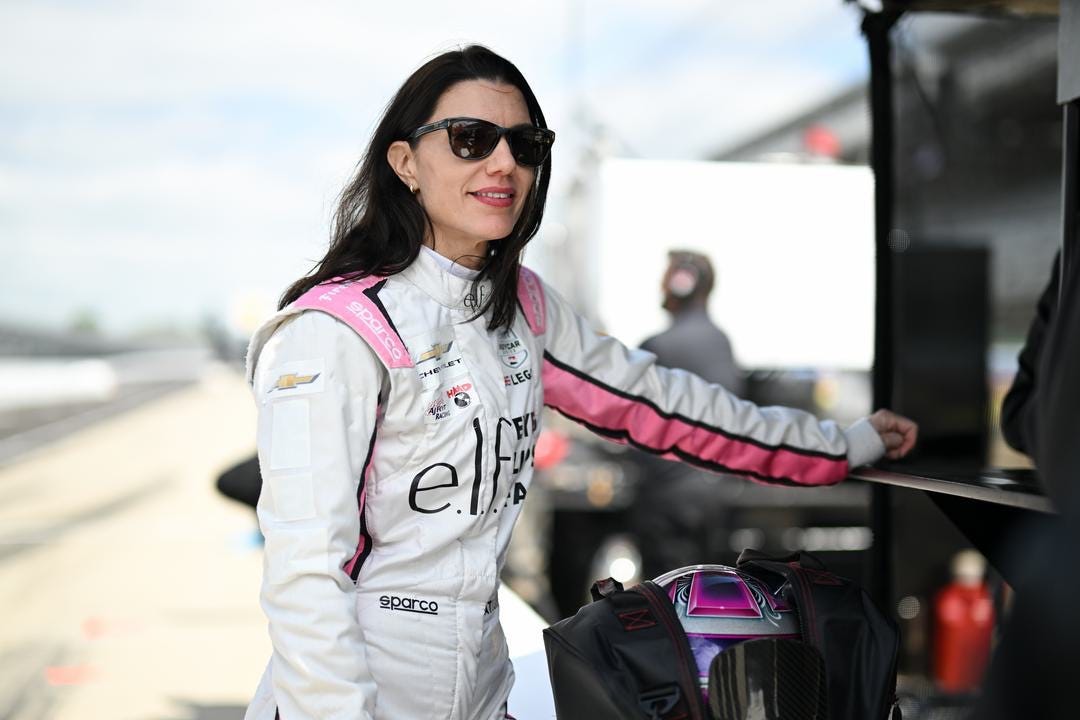
The Indianapolis 500 is arguably the greatest spectacle in racing on the planet. Each year, a cacophony of storylines fuses together after a legendary buildup that sees that year’s competitors rack up thousands of laps around the famed motor speedway, all in preparation for one race. It’s where careers are born, reforged and ended. To say that each year, the Indy 500 makes history is an understatement. But this year, there was an extra slice of history being made, and that was thanks to Katherine Legge.
The forty-five-year-old has been active in the motorsport world since the turn of the millennium. In the interlude between then and now, the British driver has competed in the British Formula 3 Championship, Formula E, the IMSA Sports Car Championship, NASCAR, been a test driver for the Minardi Formula 1 team and has, of course, driven in IndyCar.
Legge became the first woman to win a major open-wheel race in North America at twenty-four years of age. This was when she was competing in the Atlantic Championship back in 2005, and Legge achieved victory on her first attempt at the opening round in Long Beach. It was a feat she repeated in Edmonton and San Jose, respectively, that season, as well as stepping onto the rostrum a further two times before finishing the year in third place overall.
“It’s not sunk in yet (winning at Long Beach) that I’ve made history but, hopefully, it will encourage more young girls to get into the sport.“ - Katherine Legge
Legge then isn’t a stranger to making history. Having competed in the Indianapolis 500 back in 2012 and 2013, she then made a return to the infamous oval in 2023 and 2024. In the former, she set the fastest qualifying time for a woman at the venue in history. With a year out on the sidelines last year due to budgetary reasons, 2026 would be another matter entirely. This time, Katherine Legge was back and ready to forge history once again.
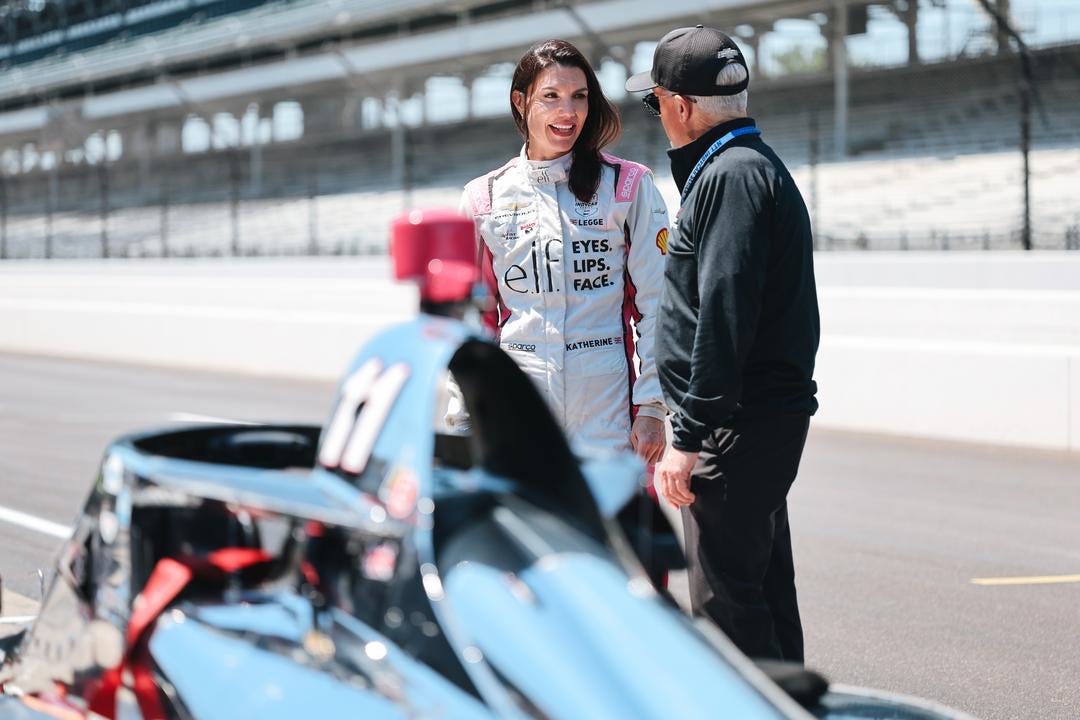
Attempting to Do the Double
When the news was announced that Katherine Legge would be returning once more to compete in the Indy 500, it wasn’t much of a surprise. With a long career behind her that has seen her go in and out of the series, it made sense. What did make bigger headlines came later when it was announced that Legge would also be competing in the NASCAR Coca-Cola 600.
Both races are huge events on their respective calendars and are held on the same day, providing fans with an epic day of motorsport action. Attempting to do both is something so rarely seen that in attempting it, Legge would become only the sixth person in history, and the first woman, to try it. Kyle Larson was the last to attempt it back in 2024, and of the previous five, only one, Tony Stewart, has successfully completed the challenge. This he managed in 2001, finishing in the top ten for both races.
To attempt it, organisation is key. The Indy 500 is held in Indianapolis, while the Coca-Cola 600 is held 574 miles away in Charlotte, North Carolina. To get from the former to the latter, the driver in question must helicopter to the nearest airport in Indiana, fly from there to Charlotte, and then be driven the rest of the way to the Charlotte Motor Speedway. What’s more, the driver must naturally qualify for both races and be able to switch between the two disciplines of racing with relative ease, as the turnaround time from one to the other is not long.
The combined mileage for both races is 1100 miles, with both races taking place on large ovals while also essentially being endurance races. The toll on the driver can be and is immense. Immediately, one can see how even attempting the double, never mind succeeding, is quite the undertaking.
Katherine Legge’s Return to IndyCar
It would be not only her fifth time running in the 500 but also her fifth with a different team, as she partnered with A.J. Foyt Enterprises for the occasion. As well as teaming up with A.J Foyt, Legge would be sponsored by e.l.f. Cosmetics, which in turn would be partnering up with the Indianapolis Motor Speedway itself for the 500. Over the course of the event at the speedway, e.l.f. would showcase Legge’s motorsport journey through a storytelling wall, provide fans with a chance to leave Legge a message prior to the race, broadcast behind-the-scenes footage on Twitch and provide complimentary SPF for everyone in attendance at the 500, amongst other things.
“e.l.f. ‘s commitment to motorsport, Katherine Legge and fan activation engages fans in creative ways, and we’re excited to see them expand that presence for this year’s Indianapolis 500. Their support of Katherine and their investment in creating meaningful experiences for fans both at the Speedway and digitally aligns perfectly with the energy surrounding this year’s race.” - Douglas Boles, IndyCar President
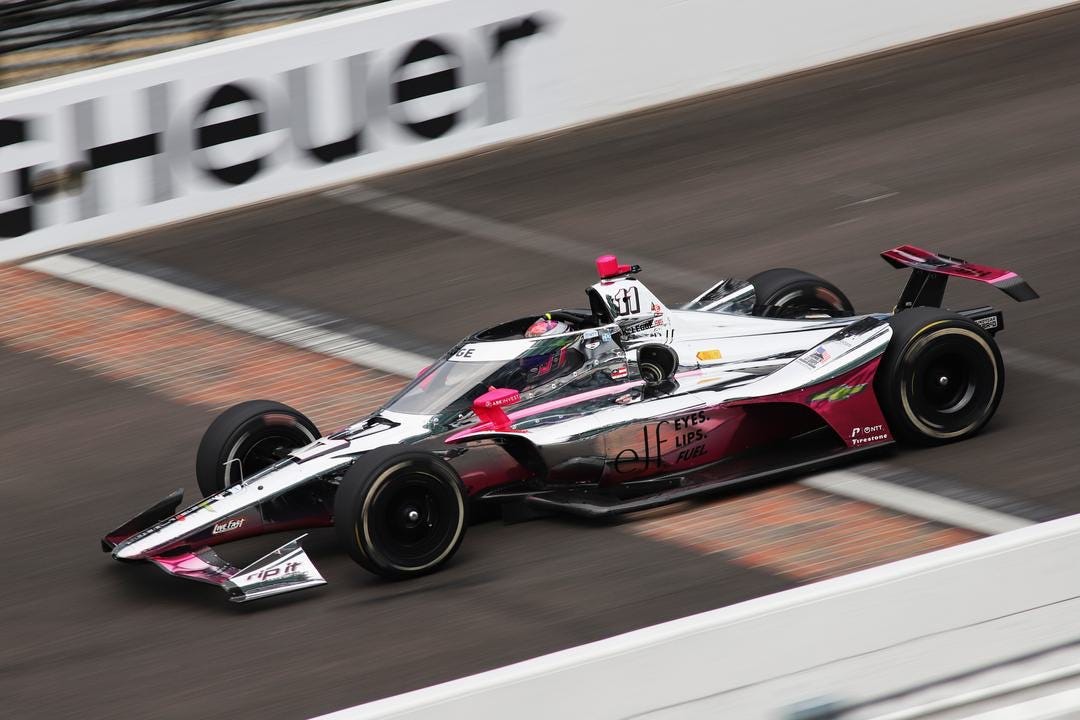
Getting Down to Business
When it came down to the on-track business end of the month, Legge wasted no time in getting up to speed - literally. In the opening practice session, she clocked in a fastest speed of 218.304mph. For the remainder of the sessions until raceday, she would keep building on this already eye-watering speed. Soon, she was comfortably inside the 220s and peaked during the sixth practice session, where she set a fastest speed around the historic oval of 231.057mph.
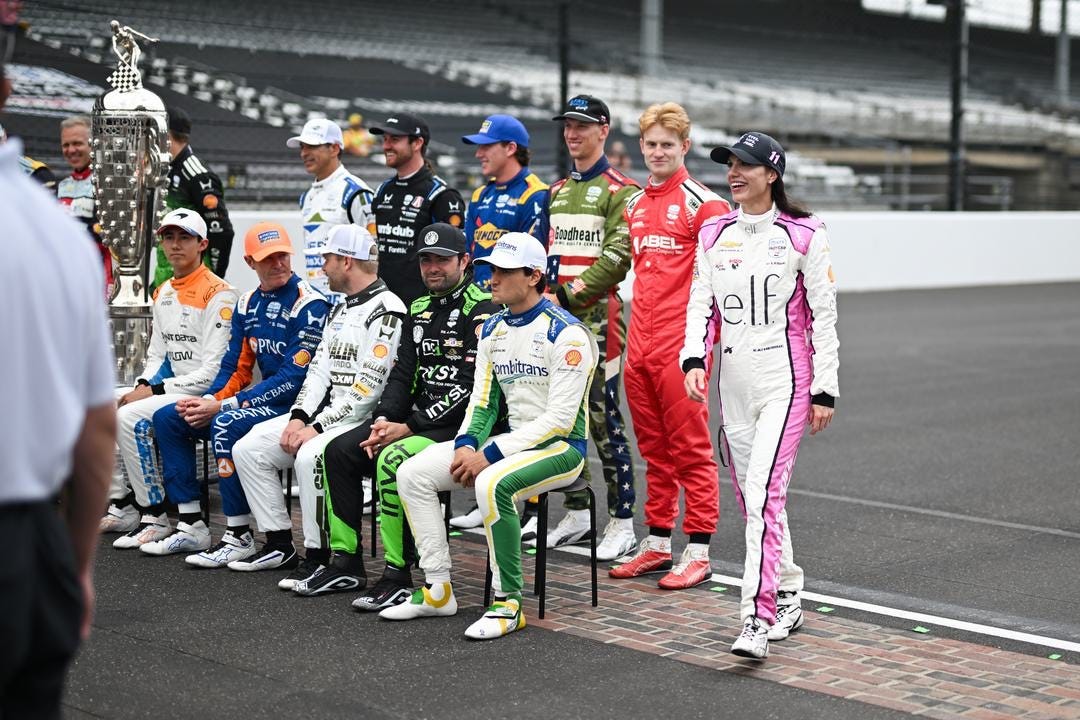
When qualifying commenced one week prior to the race, the pressure was well and truly on for all of the drivers. With the format condensed into a single attempt for each driver after the previous day’s running was cancelled due to adverse weather conditions, the laps that each driver was about to set down were more crucial than ever. Out of a field of thirty-three drivers, twenty-five of whom were full-time runners, Katherine qualified in her best Indy 500 position of twenty-sixth with an average speed of 229.456mph. She would start between Championship contender Kyle Kirkwood and Mick Schumacher and ahead of veteran competitor and recent podium sitter Graham Rahal, to name a few. The grid was now set, and with a previous best result at the Indy 500 of P22 set back in 2012, Katherine also had a personal target to aim for.
Down in Charlotte, in North Carolina, Legge clambered aboard her Live Fast Motorsport machine powered by Chevrolet to eventually end up with a starting position of thirty-seventh place on the grid. All that was left now was to go racing.
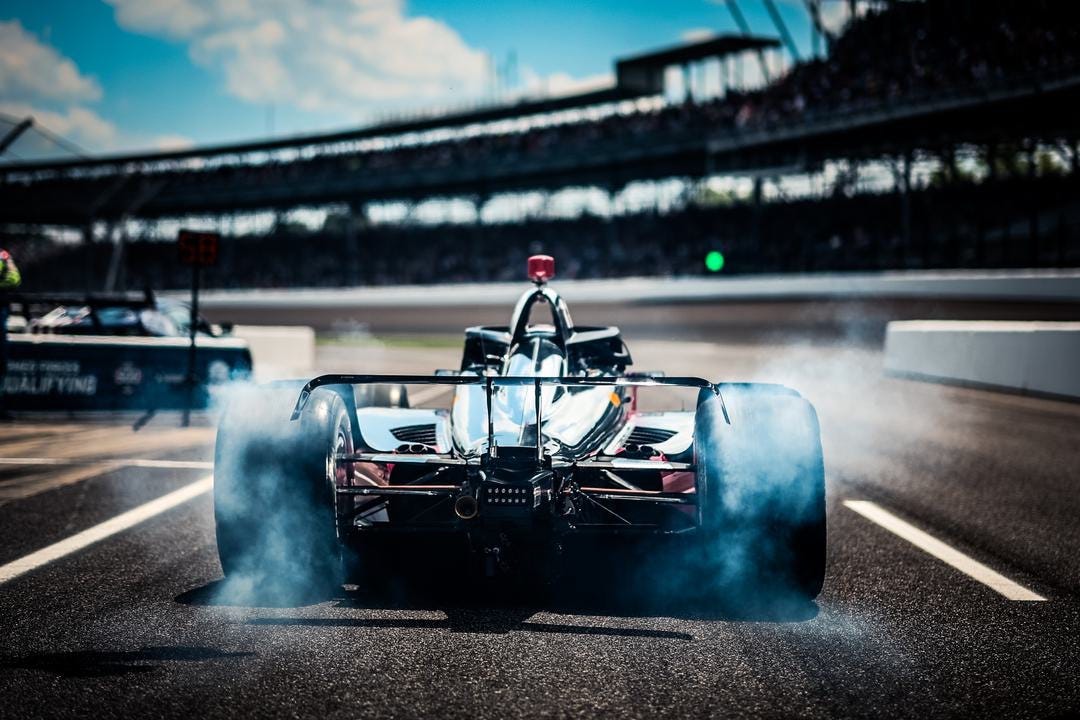
Unfortunately, neither race went the way Legge or anyone else would have liked. Just seventeen laps into the Indy 500, veteran racer and fellow one-shot driver with Arrow McLaren, Ryan Hunter-Reay lost control of his car and crashed out of the race at Turn Two. Driving behind him on track was Katherine Legge, and as Reay’s car veered back into her path on the track, she was left with one of the most unenviable positions a driver can be in. If she stayed the course, she’d plough into her fellow competitor at around 200mph. If she veered to avoid him, there was a high chance she would crash too, simply due to the combination of high speed, the action required to avoid Reay, and the unforgiving nature of the track, and be out of the race.
Up to that point in the race, Legge had been putting in an average speed of 213.080mph. The carnage she would have created for herself, never mind anyone else, would have been monumental. She opted for the second choice and, in avoiding Reay, spun off track and out of the race. As exits from races go, Legge’s was one of the most noble and selfless you’ll ever likely see. In the split second that she had to react, she was confronted with the fact that while every driver was at the Indy 500 to win, that desire should never come at the cost of putting your fellow competitors in danger. Legge emerged from the car and, subsequently, the medical centre, unharmed but understandably deflated.
Switching to NASCAR
There was little time to focus on what might have been, though, as she now had to get back to North Carolina for the Coca-Cola 600. Things started markedly better for the Britain, but her hard work and dedication would come undone during the third stage of the race. An unknown problem with the car that then presented itself when the right front wheel disconnected from the car forced her into the pit lane. The team didn’t give up, though, and she was able to return to the race. But due to that, and the incoming rain shortening the race distance, it meant that Legge would finish the NASCAR race twelve laps down from race leader Daniel Suarez.
“I think the highlight for me will be when I can finally lay down tonight, because I’m so tired! But, the opportunity to do it, the opportunity to attempt to do it, is the highlight. We are gonna regroup and think about it and reflect to see what we could have done differently. That was kind of a calamity of errors. At the end of the day, I don’t think I made too many mistakes so there’s positives to take from it too.” - Katherine Legge
While neither race went according to plan, that unfortunate possibility was always on the cards, as it is for every driver taking part in either race. The Indy 500 saw nine drivers retire, including favourite Alex Rossi, while the Coca-Cola 600 had eight retirements, including 2025 winner Ross Chastain.
But no matter what the end result was ultimately going to be, those would just be extra pieces of garnish on what was already a mouth-watering dish. Simply by starting both races, also never a guarantee in itself, Katherine Legge did what she set out to do. She became the first woman to ever attempt the double. She also became both the first British driver and the first non-American to ever attempt the double. Much like the Ollis Garage Racing Dacia Logan that competed in the 24 Hours of the Nürburgring earlier in May, it wasn’t primarily about winning or even finishing for that matter. It was making it there and about demonstrating what was possible.
More Than Just Making History
Katherine Legge went to two of the biggest motorsport races not only in America, but in the entire world, took the fight to vastly more experienced and successful drivers and proved herself capable and worthy of running with them. IndyCar requires drivers to complete an orientation session to ensure those competing have what it takes to be there. She passed with flying colours. By driving in both the Indy 500 and the Coca-Cola 600, Katherine Legge showed young women across the globe, as well as those already competing in motorsport, whatever series they may be in, that they, too, can have a career in racing and can make it to the very top.
Watching Legge over the month of May felt very much like a full-circle moment for her as she achieved once again what she had after she won the opening race of the Atlantic Championship in 2005. She’s inspired a generation. What she did as she first started out, Legge did again almost three decades later. Younger or older, experienced or rookie, she proved that reaching the top is not only possible but so too is longevity - that it’s never too late to chase after what you want and that there are people out there willing to back you as you pursue your dreams.