


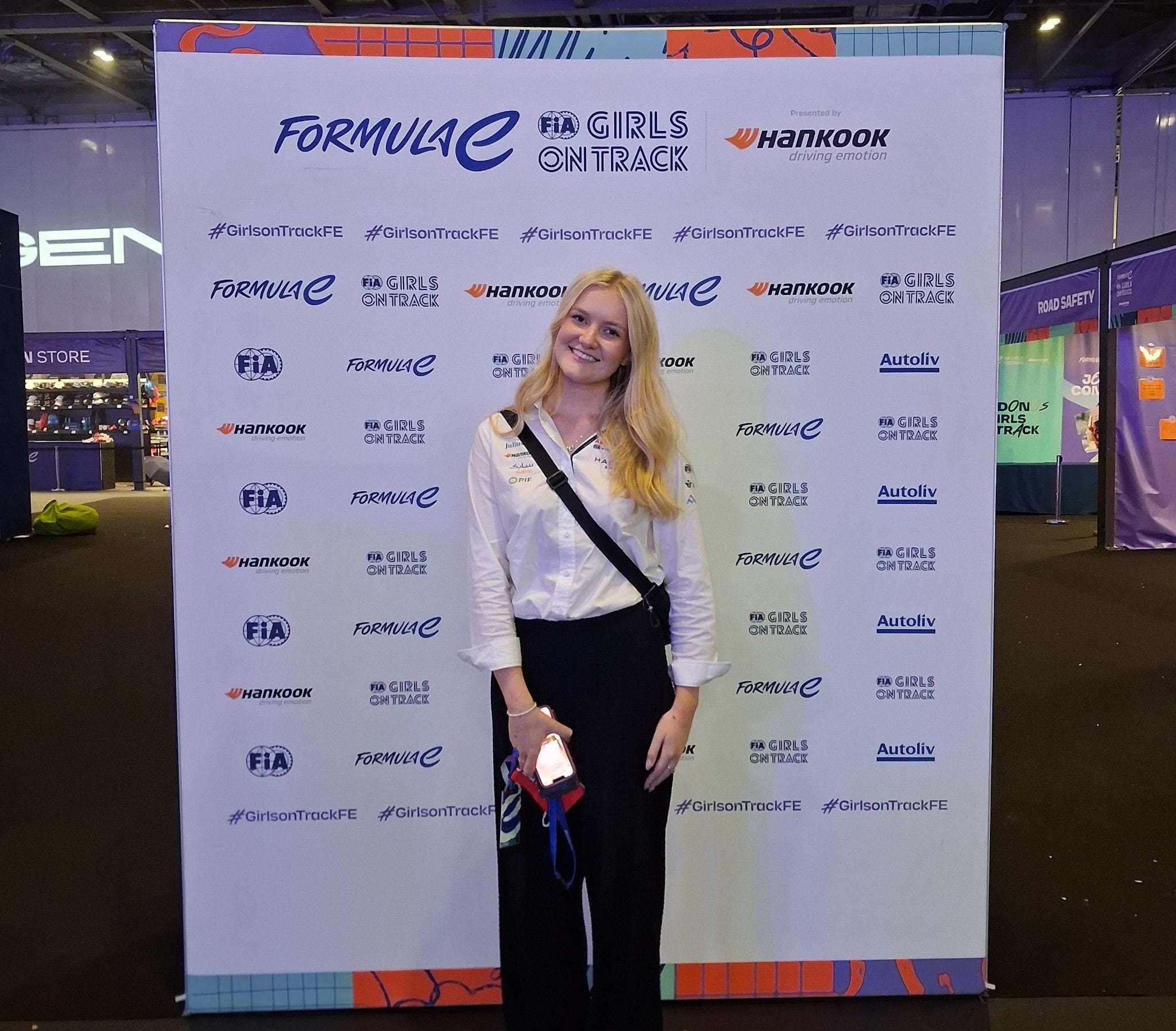
Growing up in Leeds in the North of the United Kingdom, Emily Mitchell reckoned that if she wanted to pursue her dream of working in motorsport, she’d have to one day move to London and closer to where all of the action seemed to be happening. But even as she considered that, Emily still wasn’t quite sure what that move would entail in terms of how it would concretely help her break into the world of motorsport. That was until a chance encounter when she was waitressing changed everything.
At the Season 12 Formula E Finale in London, It’s Race Week! sat down with Emily to talk about her journey into motorsport, how it led to Formula E, the highs and lows of her career so far, what being a communication executive for the all-electric racing series actually entails and much more.
Check out our conversation in full below.
“I’ve known that I wanted to work in motorsport for a very long time. That was something that I was quite lucky in - the fact that it came very naturally to me. And so I was waitressing. I’m from Leeds, in the north of the UK, where there’s no Leeds E-Prix…there’s no big race circuits in the north. And so a lot of my opportunities were down here in London. I was kind of working out if I wanted to go to university in London, to try and be closer to circuits and opportunities and teams, etc. I was at my waitressing job that I was doing in Leeds and was approached by one of my customers and they asked me what I wanted to do in the future. I told them that I really, really wanted to work in motorsport. And they actually, very kindly, were like, have you ever heard of Girls on Track? And that’s how I discovered the programme.”
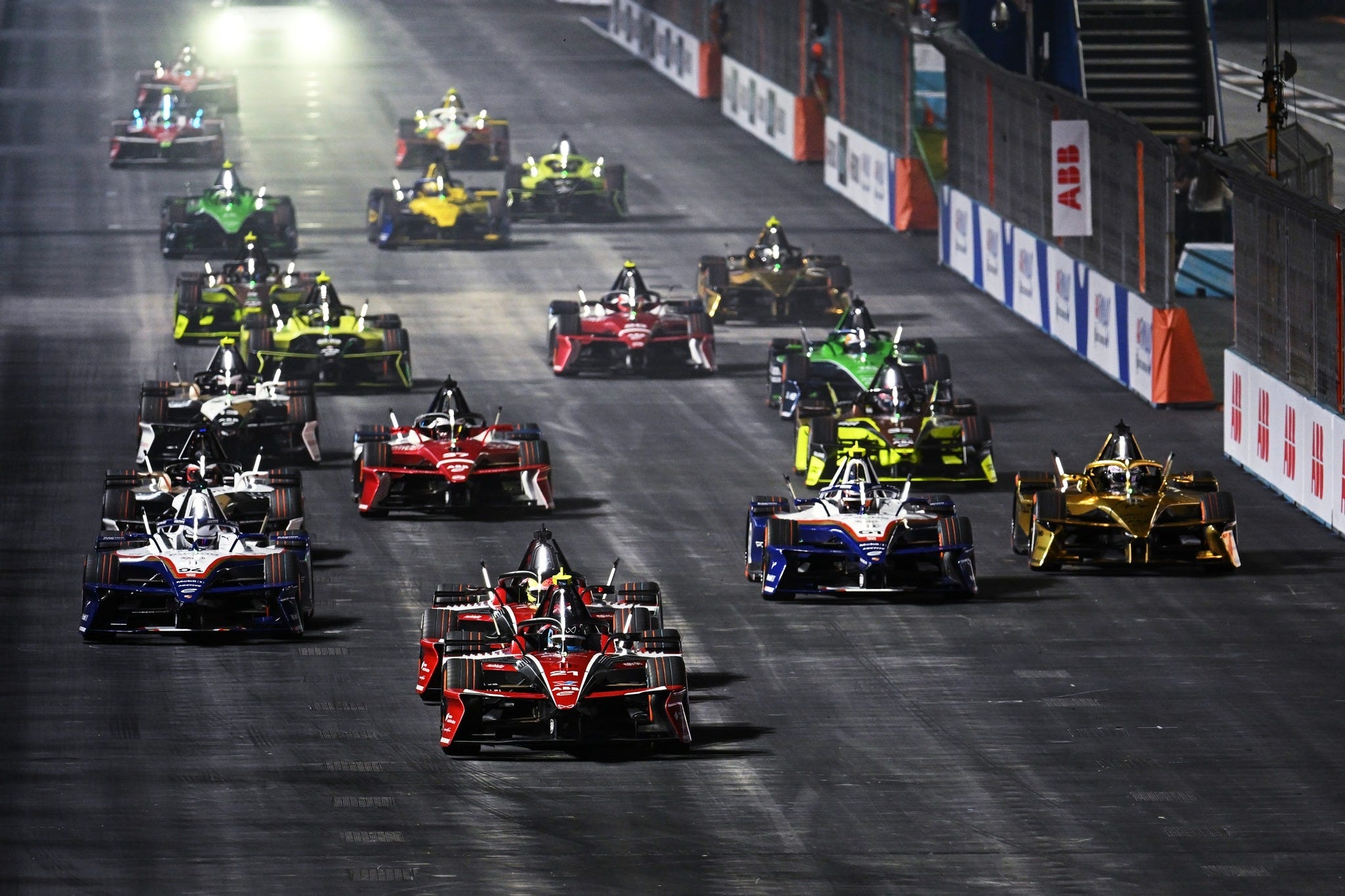
“So I joined the Girls on Track UK Facebook group and I started to be integrated in that community. The very first thing, just in terms of the timing, that came up was the London E-Prix and an opportunity to volunteer and come to the programme and go on the community tour and the events they do on that Friday. I did that at the...it must have been 2022. I came and I sat at the... The girls I saw on Friday, I was wearing the same T-shirts as them. I’m very proud to say that that’s still in my wardrobe!
That day, they take you, I’m sure, you’re very up to speed on what happens. But so many different activations, learning about actually the cars, engineering and I knew I always wanted to do things like marketing and comms. And as part of that career tour, we met all of the team PRs at the time and that was something that, you know, really kick-started my career in motorsport. Being able to speak to them and ask questions. It was a really pivotal time for me when I was deciding, do I come to London? Do I make that university decision? And they were... They’re people that I am now colleagues with and still speak to today. And I’m very grateful to them for their advice and the time they gave me. And I always want to be that for the girls that come through now.
I said to them yesterday, I did a welcome talk for them. I said to them every single person that you see walking around is rooting for you. And in Formula E even more so, we have so many women in the paddock. Unfortunately, not yet in a seat. But in terms of the teams that you know, we’ve got an almost all-female comms team for Formula E. We’ve got so many female engineers in Formula E too, so many female techs. It’s a really female- focused paddock and it’s such a supportive environment.
After Girls on Track, I did go to uni in London. I studied at King’s College London in a degree that was kind of very PR, marketing, media- focused and continued to volunteer throughout that programme. So in that time with Girls on Track, I was part of a McLaren Nurture programme. So I went over to the F1 team, did lots of opportunities and stuff there. I worked with the Mercedes Formula One and some of their Girls on Track days and kind of went from a community member to an active volunteer and actually leading some of those workshops and some of those panels with the programme. And then, yeah, I received my job offer here. My very first email was to the woman who brought me onto the programme to say thank you. So it was full circle.”
And how long have you been in this role now then?
“So this is... You know, it’s the biggest work anniversary we could ever celebrate, two months! Again, at the advice of actually one of my mentors I met through Girls on Track, who does comms... I asked two people, both someone who does comms here in Formula E for one of our teams and also someone who was at McLaren and I met during that time about if I should take a placement year.
My university did not support a placement year and you I would have had to fully pull out to do it. But the overwhelming feedback was yes, go get as much comms experience as you can, go into PR. So I pulled out of university for a year. I went and did a 15-month extended placement at NBC, Universal, going and doing PR and comms, exactly.”
Was that here or did you go over to the States for that?
“So I was based here, but there was a lot of travel. But we have a London-based team, so I interned with them. And then I actually graduated. I wasn’t at our Tokyo E-Prix this year because I was at my graduation! I got my final university results the day I started my job, which was mad! So there’s been no break in between. There have been so many, full, complete circles, both with girls on track and then, yeah, with my very funny university timelines though.”
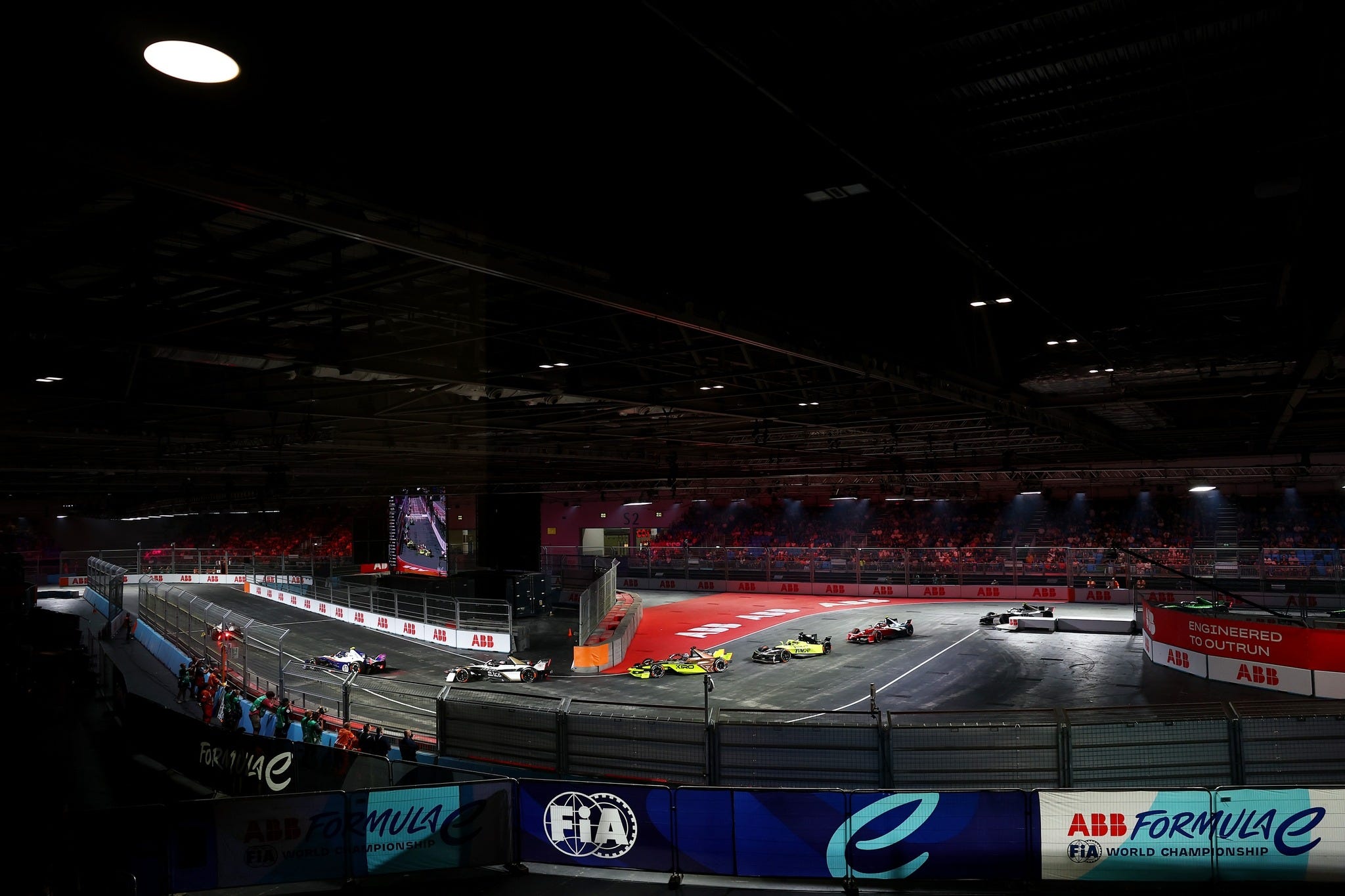
And then, obviously, you’ve got the fact that this is the location (London, Xcel Center) where you first came in and then this is, what, your second race?
“Yeah, my second race. And it’s the last one here as well. So just to add the extra elements. Honestly, if you could do a mind map of me right now, it’d just be circles! It’s so mental. Honestly, I feel like I know my way around, despite only having been here, you know, my second race. But, yeah, I feel like I know exactly where things are. It’s been amazing, the opportunity that Girls on Track gave me. Honestly, that conversation I had in that restaurant completely changed my life.
It’s so weird in that sense. When I interviewed, I spoke so extensively about Girls on Track. In every single interview I did for my role came up and was discussed and was massive... You know, when I speak to my team now and, you know, talk through feedback about why I did get selected and what, you know, everyone can admit is one of the most highly competitive, you know, everyone wants to go into motorsport, they say Girls on Track was a massive standout in terms of applications. And it is the experience that you get, the things that I was able to call upon in those interviews.
Throughout those four years, the amount of people who have just willingly given me their time and being able to just… literally have someone on the end of the phone to ask for any advice…I pulled out of university because of these girls. And I think I really did need a role model in the role I wanted to say, yes, you’re doing the right thing. And I think that is what Girls on Track is about. It’s about giving people that access to having those role models. I know one of their mottos, one of the first things that Jenny Fletcher, who’s at Girls on Track UK, ever said to me was, if you can see it, you can be it.
I think there are so many amazing female role models in comms and in marketing and I think the fact that girls are still coming today and being able to meet not only people like us, but people who work in hospitality, people who work in event experience, people who work in our build teams, that literally create this event. And then not even to mention our engineers, our techs, our driver performance coaches. There are so many fantastic figures in this paddock.
I was approached today and asked, you know, have you got contact in this department? And it’s always these women that I’m able to call upon. And I think it’s so fantastic. Everyone is really rooting for everyone. It’s brilliant.”
What have you noticed from that first time that girl’s on track throughout your time since then?
“Obviously, it’s still something that isn’t there yet, but I think it is really the fact that we’re not a minority anymore and we’re being taken really seriously.
I think people can often see, Girls on Track as a little bit fangirly. And there’s such an inheritance of, you know, seeing females, young girls, who want to come into motorsport as, young fans and liking cute drivers and all this. And I’ve really seen that change. That was something that did feel more prevalent to me four years ago when I started. I think now you have this gaggle of girls who are so driven and so determined. It’s incredible that 13-, 14-, 15-year-olds are coming to me and being able to say, this is what I want to do, this is my dream career. And they have that visibility of it, frankly. I actually don’t think the visibility there... For a girl to be able to come up to me and say, I want to be the head of premium experience hospitality, like... It’s super niche. And I’m, like, it’s incredible! You know, I was in a niche being, like, I want to do comms motorsport. That was a niche at the time.
And then you now have these girls who come up with these, you know, they want to be a performance coach or they want to be a very specific technician and I think it’s incredible that they know that. It’s not just, I like cars. They have this visibility. They have those role models. I’d say that’s been the biggest change. I think the girls who come in now, as I said, everyone’s rooting for them. They’re professional. They’re so driven. I was really inspired just getting to speak to a few of them because I saw so much of myself in them, but also more. I would not have had the confidence, the eloquence, the, you know, sheer just determination to sprint towards someone in a fan village on a Friday at 9am and say, this is my dream. Who can you get me in contact with? I had so many girls who had heard my story, didn’t want to go into comms, but they wanted my contact in a different department. And I’m like, that’s brilliant. I’d say that’s come far. Girls are really confident now. And, you know, those girls who are coming through the programme have a dream and they’re going for their dream and I think that’s so fantastic.”
What would you say then on the flip side of that is something, I mean, I know you’ve only been in this role a couple of months, but is there still something that you either hear from others or from your roots up that is still maybe the biggest challenge?
“I think availability of roles. To be quite frank, I think probably a massive issue is that you do need experience. Specifically for, like, an entry-level role. I think the way that motorsport is such a small industry from Formula E, Formula 1, like, MotoGP, anything.
It’s so tiny in terms of actually how many roles are comp roles, how many roles are technician roles. And it means that actually mobility and people moving in teams, they’re not hiring, no experience. Those entry-level roles that are a little bit more than minimum wage, they’re not coming up often. And when they are, they’re often being filled not in-house, but by people who have already done something in the network. And people may be taking a pay cut to go down into that role to move into that team. And I think it’s hard to compete with them.
It’s really hard to compete, especially girls who are fresh graduating from uni.”
And how many people who are there trying that are who then aren’t where you are now.
“Exactly. There weren’t many jobs that came up, you know, when I left university. And I was very lucky that I got this one, as I mentioned, very quickly. But, you know, even the landscape, still having visibility on those kinds of jobs for my friends, there aren’t many that come up. And it could have so easily been very different, and I know the people who were also interviewing for similar roles like me have come, you know, they’re much older. And they have years and years of experience, whether that’s from a different comms agency and they want to move into motorsport, there’s still loads of experience. And I know I wouldn’t have gotten this role if I hadn’t done MVC. So, I’d say that’s still the issue, which is the fact that it’s so difficult to get experience in motorsport. It’s something that’s been really, really, so much of a blocker and it is still so needed.
And I think, honestly, that’s why Girls on Track is vital. The only way I can think of, I’m not saying we’re going to solve this today, but, you know, Girls on Track is very grassroots. We’re trying to figure out, maybe, try and find those roles locally. Go to a karting track for it, a dirt track or whatever, and try and get it in that way and have the work experience or whatever.”
But again, it all takes money and time and organisation.
“Exactly. I’m quite fortunate that for some of the volunteering experience I’ve done in motorsport, I was able to pay to get myself there and get myself back. And, you know, I live in Leeds, again, that’s trains to London, that’s a hotel room for a night, that’s a train back. It’s a lot of money and it’s something that so few people have the luxury of being able to do those kinds of things for free. And Girls on Track, you know, as much as it’s based in London, they have pop-ups all across the UK. I’ve never had to pay a fee or anything to get to a Girls on Track event. I’ve always been really supported. Any volunteering work, they’ve always offered to pay for my travel. It’s such a supportive community in that sense.
I’ve really felt my Girls on Track network. There are people here today that I still know as the Girls on Track girls, and we always speak to each other. It’s a little circle within the circle. There’s team PRs that I knew of and idolised for so many years and I was able to message when I was interviewing here and, you know, ask for advice and guidance and when I got the job, you know, what do you think I should be going for? There’s so much of that community, that circle that stays with you. It’s about making that circle as big as possible and getting everyone in it because I know for a fact, I would never say no to speaking about Girls on Track, I’d never say no to speaking to a girl, I would always accept a LinkedIn connection and I know that is the same for every single person who’s been on that programme.
There’s so much strong talent, I just wish that there’s definitely a gap between leaving university and getting into motorsport. I’m aware there are so many girls of my age that were on the programme with me that are now going into different industries to get that experience to then hopefully circle into this industry.
And I think that’s where we are at the moment with entry-level jobs. Like, and for comms, that’s achievable, you know, there’s so many transferable skills but for engineers and for technicians, you know, it’s a very different skill set.”
I was going to say with comms you at least, if you’ve got another interest in another sport, maybe you can go and work there and try and get experience there. But with mechanics, engineers, it’s a little bit more complicated.
“Exactly, you need to be getting that grassroots experience at the very early stage of your career in the industry. Motorsport, engineering, even, you know, the way we have our technicians, our engineers, is so different. They’re really fire and ice and so, you know, I do think as much as comms and some marketing professions, you have people who are able to kind of go away, hone in their skills, jump in, like, really bridging that gap to make sure that people who have been working and have been striving towards their goals and have been active in these programmes and have the right connections and have the right dreams and have the right ambitions, are able to get in at the right time to help their careers. I think that’s the next big step.”
Formula E returns December 18th in Jeddah, Saudi Arabia.