



A lack of financial backing has become a defining hurdle in motorsport, regardless of gender. As 2025 F1 Academy Vice Champion Maya Weug puts it: “Motorsport is a beautiful sport, but without the money you cannot get far.”
Data from Go Drive Line backs this up. In 2010, a credible junior career leading to Formula 3 cost roughly €3.5 million (about $4 million USD). By 2026, that same trajectory demands closer to €7.5 million ($8.5 million USD). Three main forces are responsible:
Equipment inflation: A competitive OK kart package has tripled in real terms since 2012.
Calendar expansion: Formula 4 and Formula 3 regional series now run 7 to 9 rounds across multiple continents, doubling logistics.
Engineering arms race: Telemetry, simulator hours, performance coaches, and physios are no longer optional—they are table stakes.
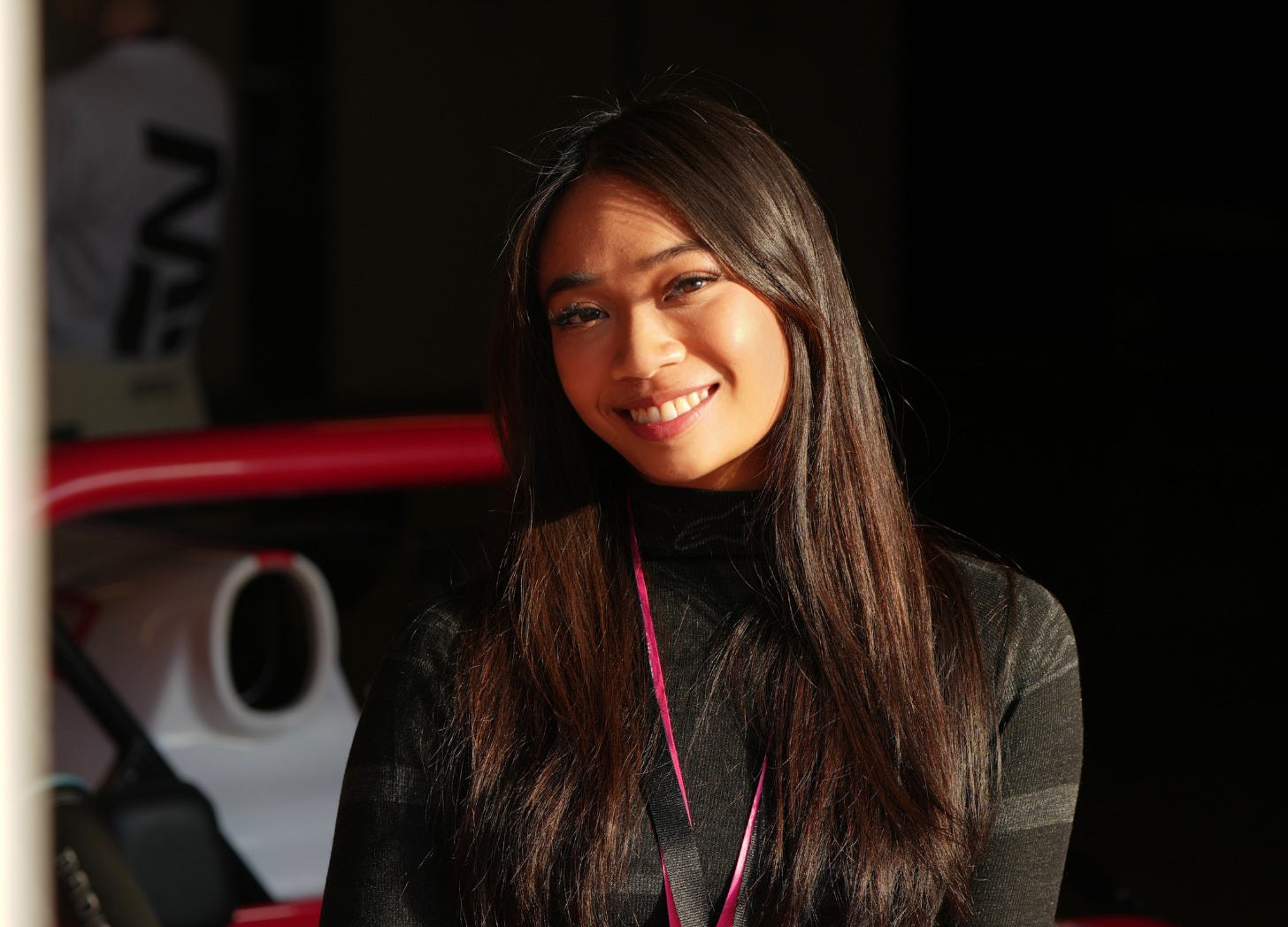
But you don’t need to look far up the single-seater ladder to see this problem firsthand. Meet Farah Irdina: a law graduate currently pursuing her Certificate in Legal Practice (CLP). She balances the gruelling demands of law school with a fierce drive to kickstart her career in motorsport.
The kicker? She is navigating her motorsport journey almost entirely on her own.
“I believe a big part of it is because motorsport is an expensive sport — it’s not easy to make a career out of it. My parents are still not supportive about it as we speak and mentioned it was a waste of time, even though it makes me happy. Not to mention that they still think it’s a ‘boy sport’. Hence why I am mostly doing it on my own.”
From sourcing sponsors to navigating the challenges of being a late joiner to the sport, this is the story of how Farrah balances her life as a law student, racer, and everything in between.
How A Former Equestrian Discovered Her Passion For Motorsports
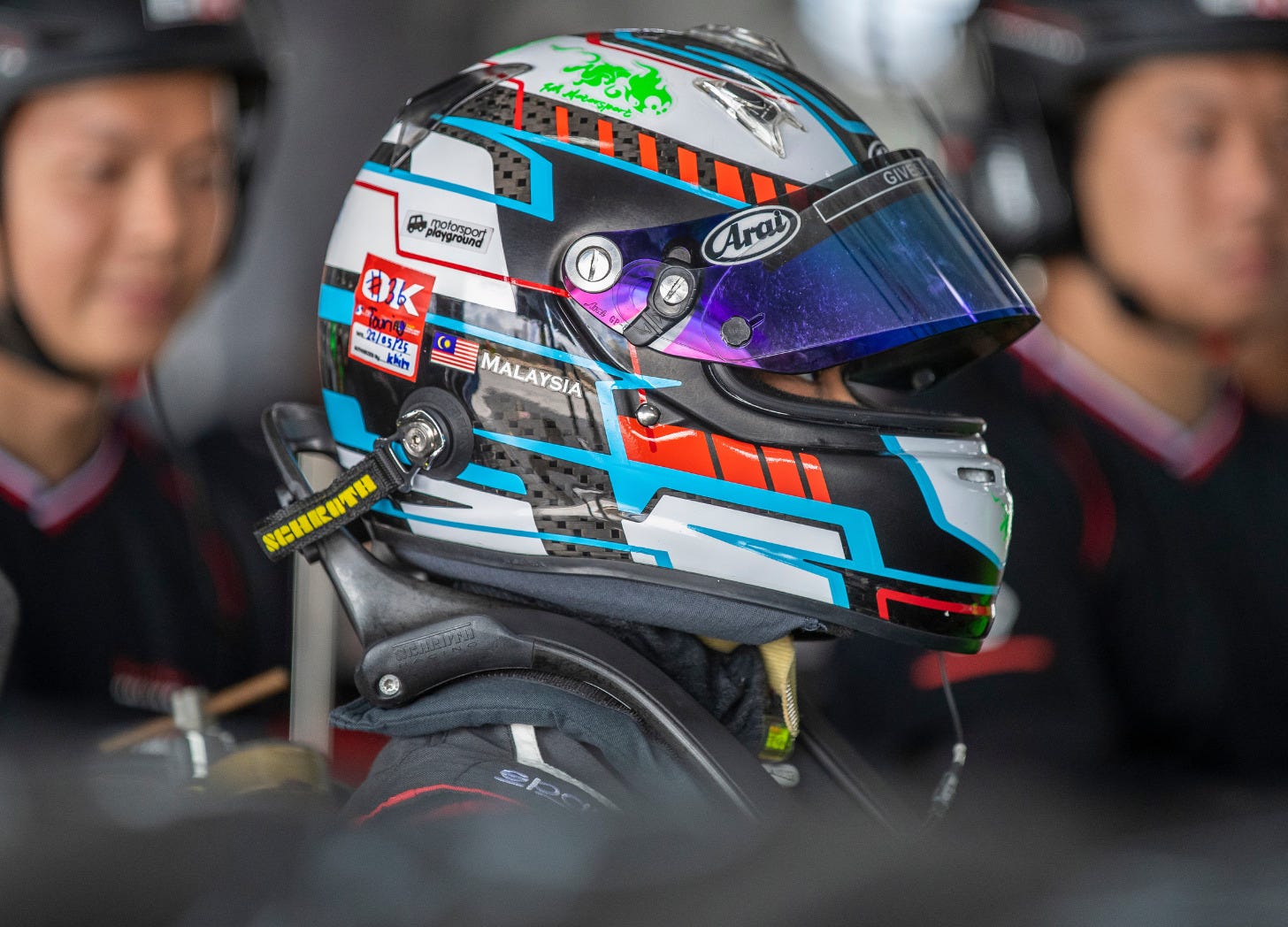
Before racing, the Malaysian spent over a decade as an equestrian. It was a defining part of Farah’s childhood and the only sport she knew. Having outgrown her horses and knowing she would soon head to the United Kingdom to complete her law degree, she made the difficult decision to sell them four years ago.
“Losing my horses was really hard for me, and I felt like I didn’t belong anywhere — until I tried karting.”
Farah fell in love with motorsport when a friend encouraged her to try fun karts at Sunway X Park in July 2023. The seed had been planted long before, though; as a kid, she used to watch Formula 1 with her Dad during the Michael Schumacher era.
As it turns out, equestrian and karting don’t differ too much in terms of discipline.
“Equestrian was all about mental preparation, focus, being able to see and calculate distance between jumps, and having a fast reaction. I would often wake up every morning to drive to the stables and train to be better. I did the same thing for racing.”

Still, to reach the pinnacle of professional motorsport, most drivers start karting between the ages of four and eight. Farah entered her first kart race in her late twenties. Despite the daunting prospect of competing against drivers who had been racing for years, she knew she had the drive to make the most of her circumstances.
She found a strong support system, too. Her teammates at Maverick Karters took her under their wing to teach her the art of karting—and the results speak for themselves.
Since her debut in June 2023, Farah has dedicated a year to building her karting portfolio. She competed in the Sodi World Series, Asian Endurance Series, and Maverick League Sprint Race, consistently securing podium finishes along the way.
Transitioning To Open Seaters and Circuit Racing
In 2024, Farah earned the chance to graduate to circuit racing. She began testing in a Proton Saga with Axle Motorsports—the brainchild of Malaysia’s only Formula 1 driver, Alex Yoong—despite never having driven a manual car before. Just a month later, she secured a top-ten finish in Round 1 of the Saga Cup at the Malaysia Speed Festival.
“If it wasn’t for them, I would not be lucky enough to race in the circuit. I knew I wanted to be a racing driver at that point, and I took the chance knowing the hurdles I will be going through to continue racing.”
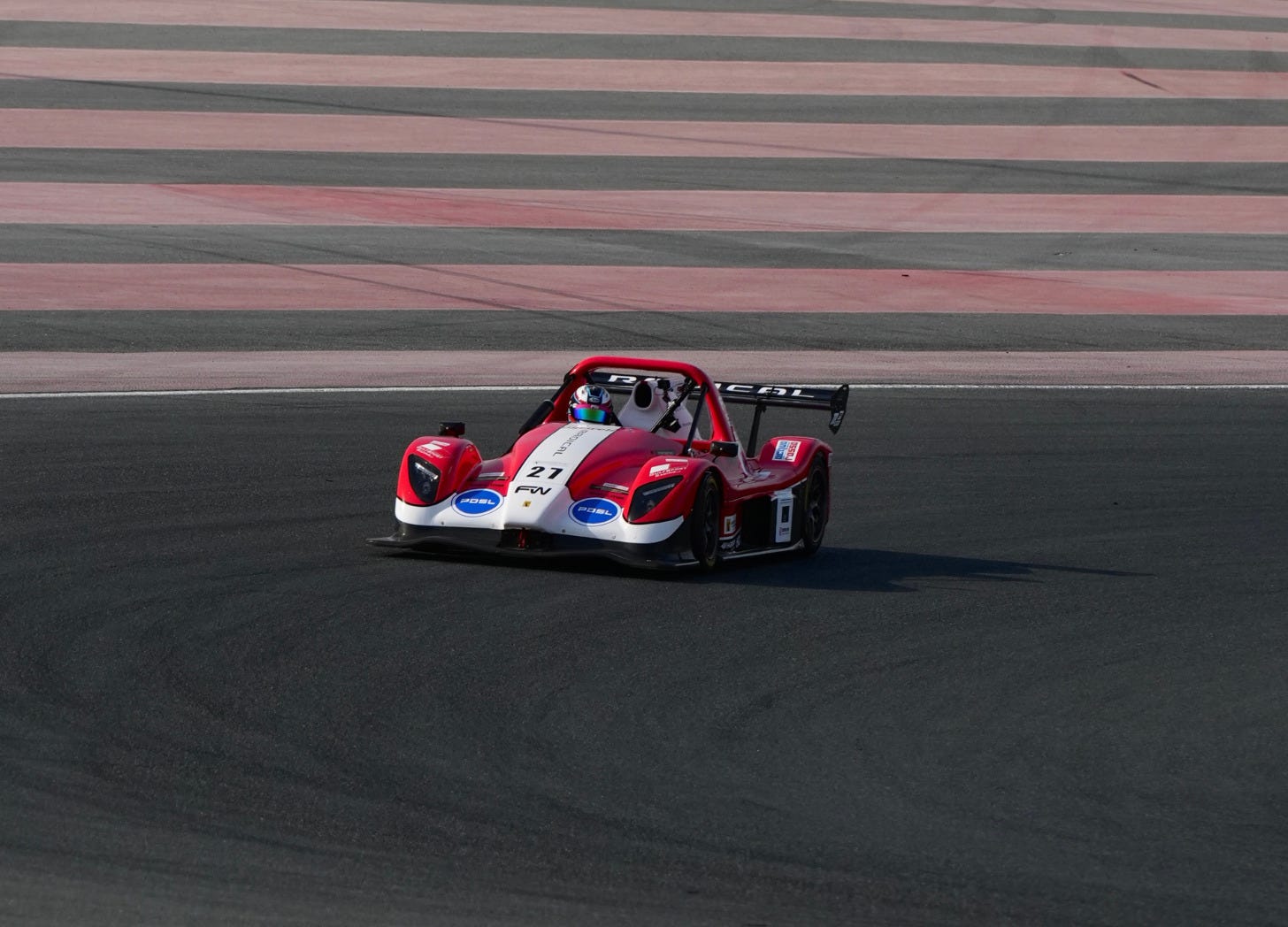
While studying in the UK, Farah qualified 16th in a Radical SR3 XXR at the Dubai Autodrome for the Formula Woman Nations Cup, despite it being her first time in a Radical. It marked one of the biggest milestones of her young career: her international debut against a grid of highly experienced drivers.
When asked if she prefers a specific class of machinery, Farah notes that while she enjoys open-wheelers like the Radical and Formula Renault, she ultimately favours touring cars. This preference stems from her recent campaigns in the Thailand Super Series 2025 Super Touring Category and the Malaysia Speed Festival (MSF) Merdeka 111 Lap.
“I believe adaptability is one of the most important factors for growth in this sport. There are times when your car feels completely different from the last race, and as drivers, we need to know how to handle those situations and make the best of it.”
Racing With A Purpose
Farah is clear on why she races. As a late entrant to the sport, she wants to see more women on track and hopes to inspire others to chase their motorsport dreams.
She draws inspiration from drivers who took unconventional routes into motorsport and sim racers who built successful careers — think names like Samantha Tan, Jem Hepworth, and Laura-Marie Geissler.
“As someone who entered motorsport later than most drivers and without a large budget behind me, those stories resonate deeply. They remind me that there isn’t just one pathway to success in racing. What matters is making the most of every opportunity, continuously improving, and staying committed to the process even when the odds seem stacked against you.”
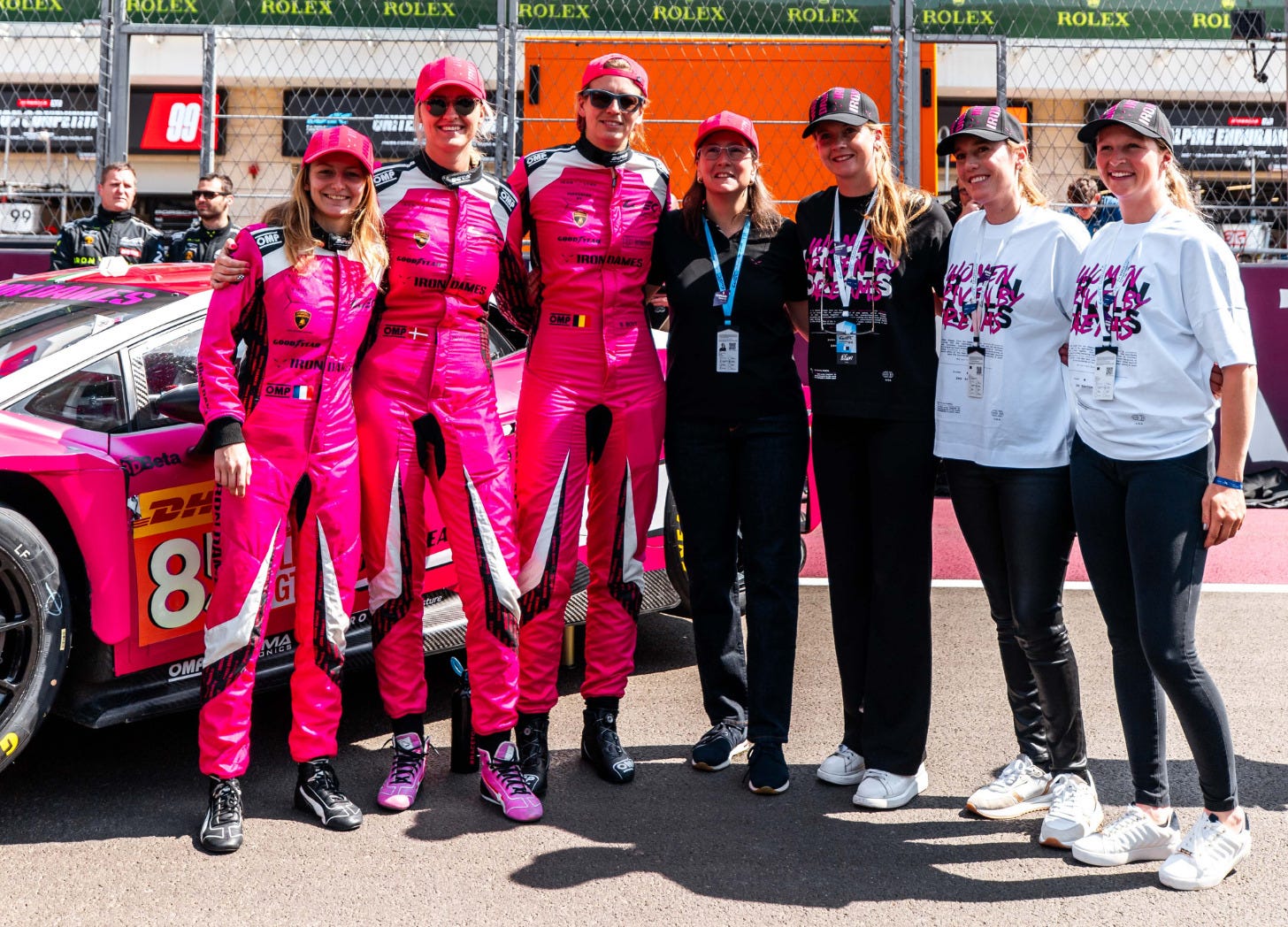
The Iron Dames racing team and F1 Academy serve as another major source of inspiration. Watching an all-female team and fellow women succeed at the highest levels of racing provides a powerful boost, especially in the early stages of her career.
To drivers like Farah, they prove women belong in motorsport—not because of a quota or special treatment, but through pure talent, professionalism, and on-track results.
“Their success shows that motorsport is becoming more inclusive and that there is space for women to compete, lead, and succeed at the highest level.”
But racing demands everything: financially, mentally, and physically. This reality shapes how Farah approaches sponsorship. Striving to succeed in a financially brutal sport takes a heavy mental toll, particularly without existing financial backing.
At one point, she was pitching to 10 to 15 companies a day before she could even focus on her studies. Of those, only a handful ever replied to schedule a meeting. Her struggle echoes that of Doriane Pin, whose progression from karting to car racing stalled in 2020 when rising costs outpaced her family’s support.
“Sponsors want visibility, engagement, and a return on their investment. I have found that authenticity works best. Rather than approaching every company for funding, I focus on partners whose values align with my own and with motorsport.”
The Next Steps For The Law Graduate
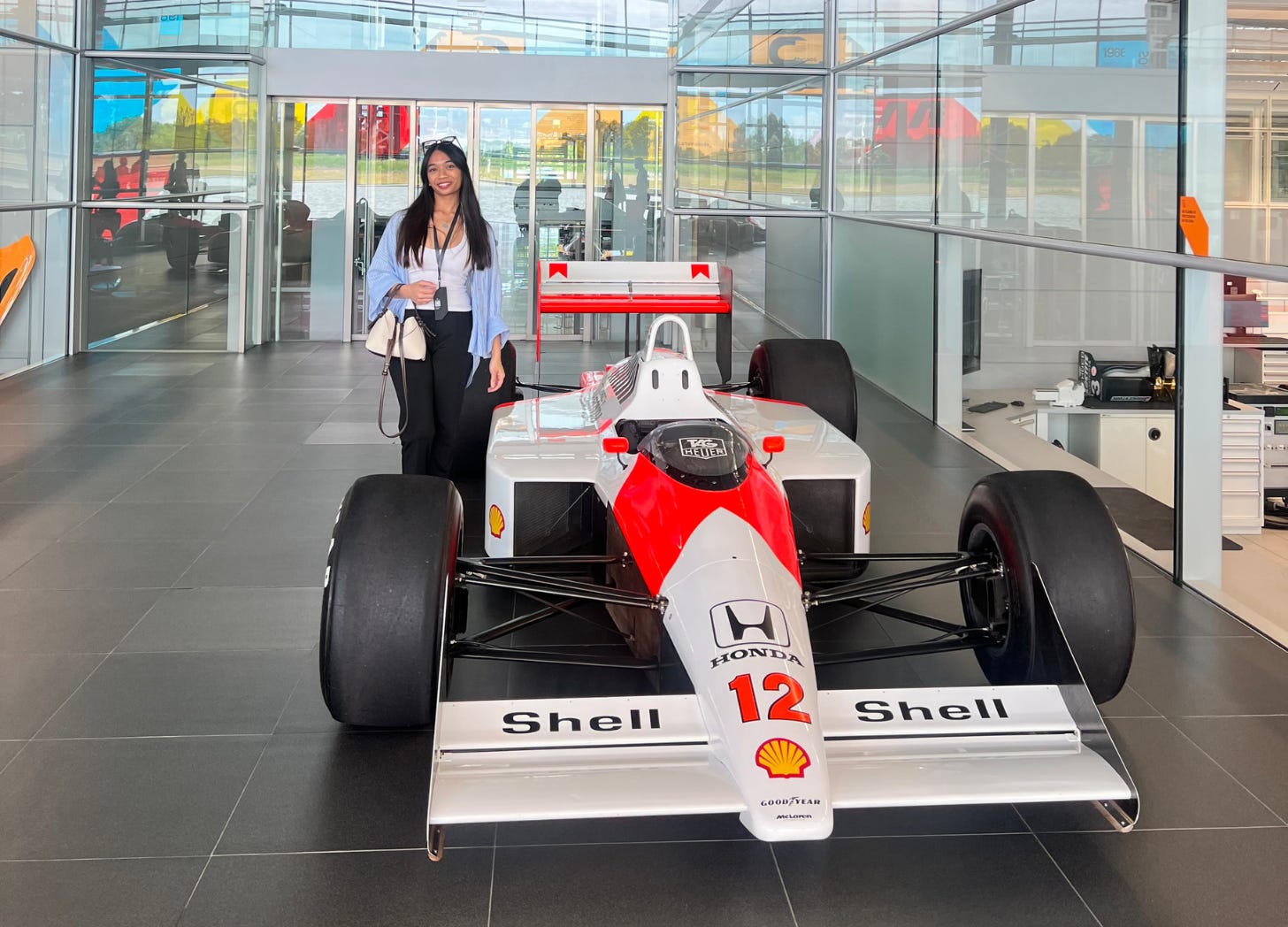
Studying in the UK was not just an important step in her legal education; it was a gateway to opportunities previously out of reach. A major milestone was her acceptance into the McLaren Cohort Programme in 2025.
What stood out most was the chance to interact with staff across the Woking-based facility, gaining a deeper understanding of everything that happens behind the scenes before a car hits the track.
“Visiting the McLaren Technology Centre allowed me to see how the entire operation comes together. From engineering and aerodynamics to performance analysis and driver preparation, it was fascinating to learn how the McLaren Formula 1 cars have evolved over the years and hear directly from those responsible for designing, developing, and continuously improving the car.”
Another highlight was meeting her cohort. Many aspired to become engineers or to take on technical roles within motorsport. Seeing their shared ambition and passion for engineering reminded her that motorsport extends far beyond the drivers, reinforcing the need for diverse talent across the industry.
Since returning to Malaysia, Farah has focused on her Certificate in Legal Practice examinations — the next hurdle in qualifying as a lawyer. The postgraduate qualification carries a reputation for a brutally low pass rate, typically hovering between 10% and 25%, despite a slight upward trend in recent years.
“It is not an easy decision because it makes me feel like I am behind and I am not moving forward in racing, but I often remind myself that I am on a different path from others.”
It’s a harsh reality check for any racer forced to put their career on hold, but Farah is working toward a reality where she can balance being a full-time lawyer and a professional motorsport athlete. Once her exams are over, she plans to refocus on securing sponsors and meeting potential partners to get back on track.
As for her future plans, Farah is open to exploring an alternative route to the traditional single-seater ladder: GT racing. Unlike the Formula series, where open-wheelers are built purely from the ground up for racing, GT cars are heavily modified, race-ready versions of high-performance road cars.
“GT racing appeals to me because it combines everything I enjoy about motorsport — endurance, strategy, teamwork, especially at an international level. Some may say it’s impossible and hard since I would need millions to be able to race in GT, but I would not give up until I know I have tried every possible way there is.”
Her short-term goal is to continue building experience in circuit racing and endurance events while progressing through increasingly competitive championships. Competing in events like the Malaysia Speed Festival, Malaysia Championship Series, Formula Woman Nations Cup, and the Thailand Super Series has been part of that journey.
Long-term, the Malaysian aims to gain more seat time in touring cars and GT-style machinery, while securing the partnerships needed to compete consistently at the highest level.
Beyond chasing every tenth on track, she races to drive change off it by using her platform to make motorsports more visible and accessible, especially for women at any age who may never have considered it a realistic career path.
“If I can help even one young person believe that they belong in this industry, then I am contributing to a stronger and more diverse future for the sport.”