


The 2026 British Formula 4 season gets underway this weekend at Donington Park, with three female drivers participating, so let’s get up to speed with everything you need to know about one of the most exciting junior single-seater championships in the world.
What is British Formula 4?
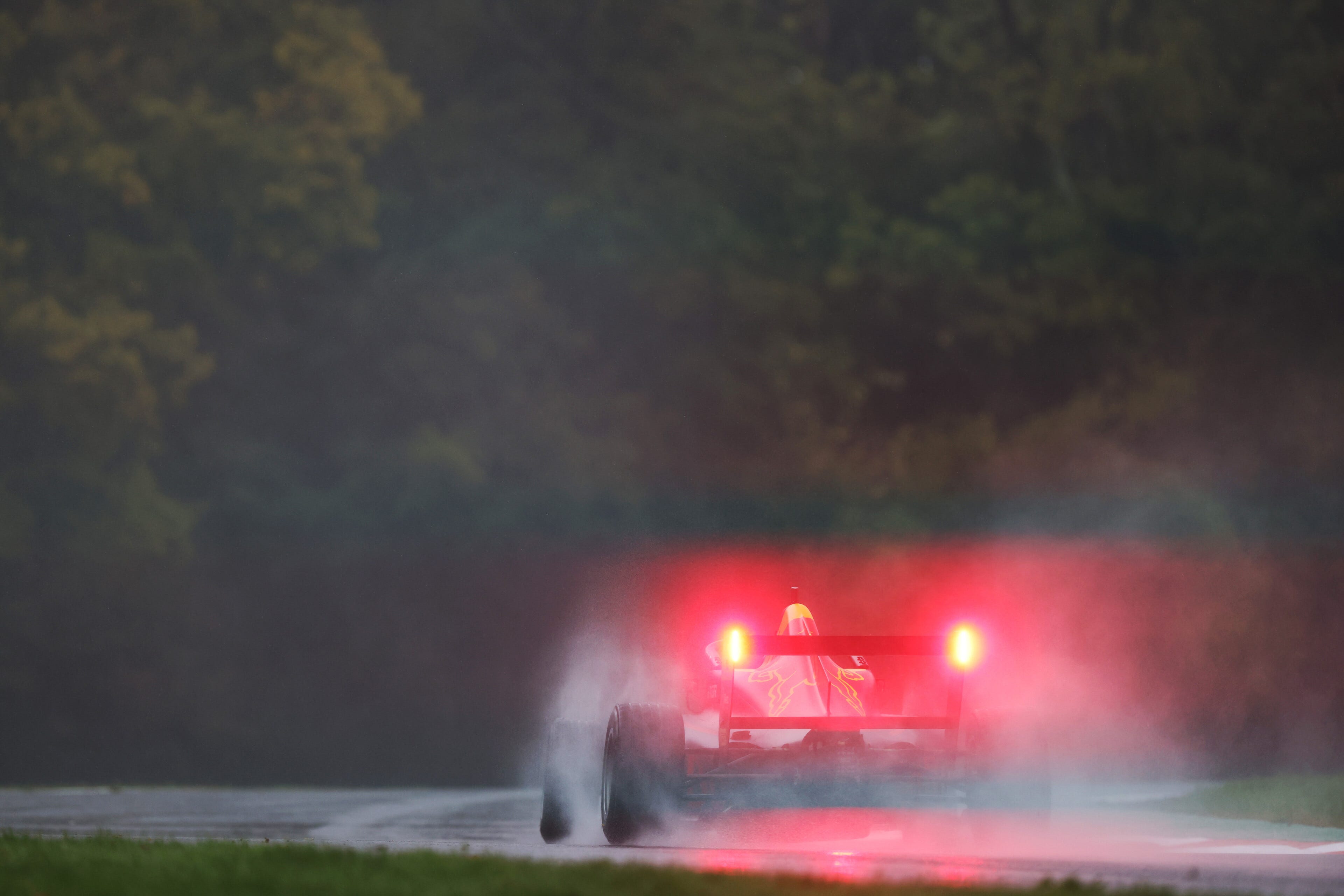
British Formula 4 is an open-wheel racing series based in the United Kingdom, designed to help young drivers make the transition from karting to single-seater racing and enabling them to race on some of the most challenging and renowned circuits in the world.
Officially known as the Wera Tools F4 British Championship certified by the FIA, the series has been administered by Motorsport UK since 2022 and is organised by the British Automobile Racing Club (BARC). It replaced the British Formula Ford Championship and has operated under FIA Formula 4 regulations since 2015, making 2026 its twelfth season.
The series forms part of the TOCA tour, running as a support category to the British Touring Car Championship at eight of its ten events. That means capacity crowds, a high-profile paddock, and live free-to-air television coverage in the UK at the majority of rounds — an exposure platform that very few junior series anywhere in the world can match. For those watching outside the UK, all Sunday races are livestreamed via the championship’s YouTube channel.
As with every FIA-certified Formula 4 championship, the goal is straightforward: it is the first rung on the single-seater ladder to Formula 1, with top finishers earning FIA Super Licence points, which are required to compete in F1. The top seven drivers in the championship earn points, with the overall champion receiving 12.
A Look Back in Time
Since its first season in 2015, British F4 has built one of the most impressive alumni lists in junior motorsport. The very first champion was Lando Norris — then just 15 years old — who stormed to the title with eight victories. Oscar Piastri, Logan Sargeant and Jack Doohan were among the names that followed him through the series in 2017 and 2018. That alone gives you a sense of what this championship can produce.
Other familiar names like Zane Maloney — now a Formula E driver for Lola Yamaha ABT— and Luke Browning — now Atlassian Williams F1 team reserve driver — claimed the overall title in 2019 and 2020 respectively, in what remains one of the most dramatic championship deciders in the series’ history, decided by a red flag and half points in a torrential downpour at Brands Hatch.
2024 added another chapter worth noting: it not only saw record female participation, but also saw Abbi Pulling become the first female driver to win a race in British F4 outright, en route to that season’s F1 Academy title.
The Format
Each race weekend in British F4 follows a three-race structure across two days. Qualifying determines the starting order in different ways for each race: Race 1 uses each driver’s second-fastest lap from qualifying, Race 3 uses the full qualifying order, and Race 2 — the reverse grid race — flips the top 12 from qualifying to shake up the field and generate additional overtaking. Drivers who qualified outside the top 12 keep their qualifying positions for Race 2.
Points are awarded differently depending on the race. Races 1 and 3 follow the standard FIA points system — 25 for the winner down to 1 for P10. Race 2 operates on a reduced scale, with 15 points for the winner down to 1 for P8, and bonus points awarded for positions gained from a driver’s starting position. Two points are also on offer for the fastest qualifying time across the weekend.
Alongside the main Drivers’ Championship, there is a Rookie Cup for drivers who have not entered more than three race meetings in any car prior to 2026, and a Challenge Cup for those who cannot commit to a full season. The top seven drivers in the overall championship earn FIA Super Licence points.
The prizes on offer are significant for this level. The 2026 champion earns coaching days with both Atlassian Williams Racing and Mercedes-AMG Petronas, alongside those Super Licence points. The Rookie Cup winner secures free entry to the 2027 championship.
The Car
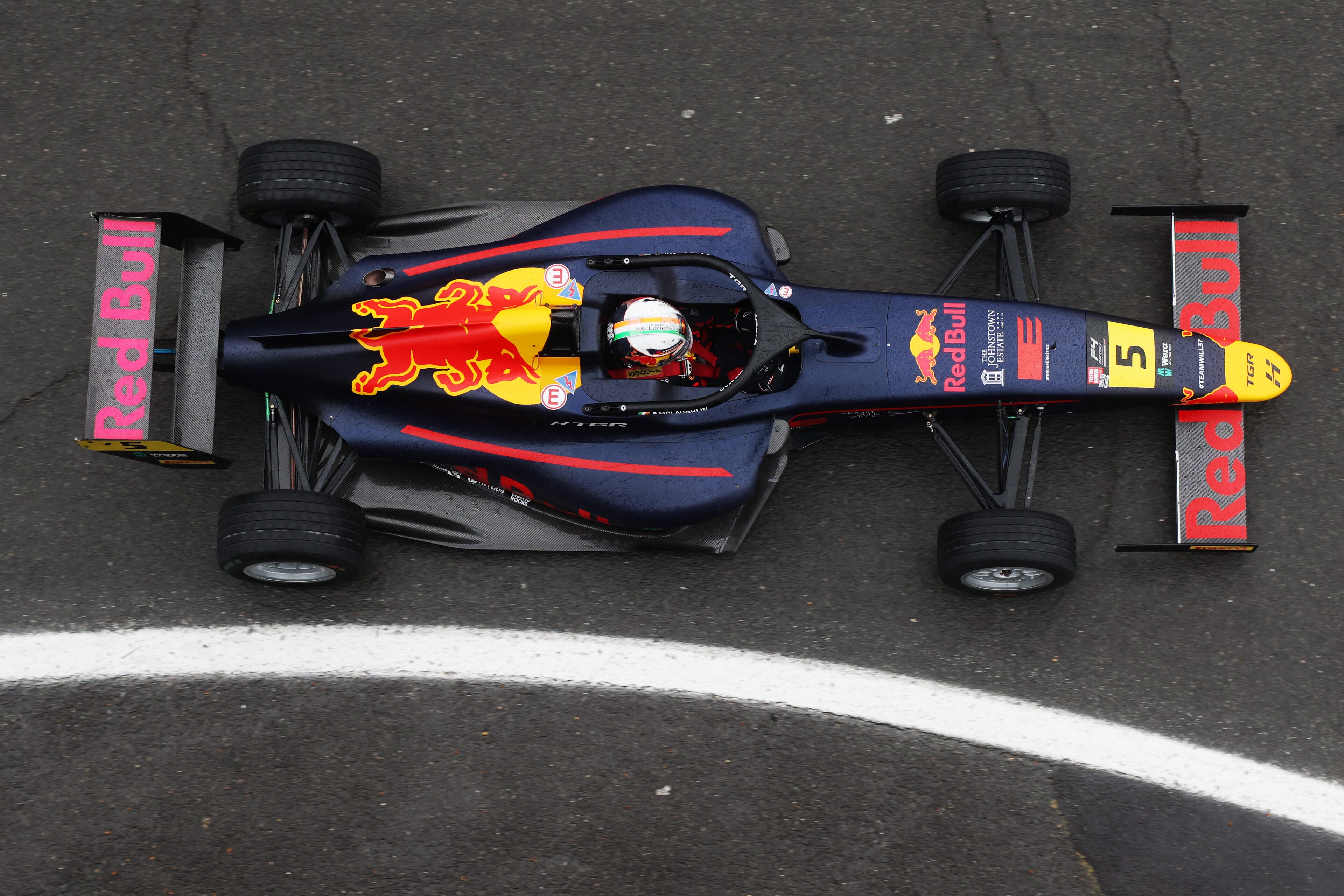
Every driver in British F4 competes in an identical Tatuus T-421 chassis — the same car used across a number of FIA Formula 4 championships in Europe. It is powered by an Abarth engine and runs on Pirelli tyres, creating a controlled, level-playing-field environment where the focus is firmly on driver development and racecraft rather than engineering advantage.
The 2026 British F4 Season
This year’s grid is the largest in British F4 history, with a record 30 cars confirmed across eight teams, representing 15 different nationalities. The 2026 calendar spans ten events and 30 races, visiting some of the UK’s most iconic circuits alongside an overseas round at Circuit Zandvoort — the home of the Formula 1 Dutch Grand Prix. The full calendar is below:
Round 1 — April 18–19: Donington Park (National)
Round 2 — May 9–10: Brands Hatch (Indy)
Round 3 — May 23–24: Snetterton
Round 4 — May 30–31: Silverstone (GP)
Round 5 — July 11–12: Zandvoort
Round 6 — July 25–26: Thruxton
Round 7 — August 22–23: Donington Park (GP)
Round 8 — September 5–6: Croft
Round 9 — September 26–27: Silverstone (National)
Round 10 — October 10–11: Brands Hatch (GP)
Three Female Drivers to Watch This Year
This year, three women are competing in the British Formula 4 season. Chiara Bättig lines up with Hitech Grand Prix backed by the Red Bull Junior Team, while Daniella Sutton joins Chris Dittmann Racing for her single-seater debut as a BRDC Rising Star. Ella Lloyd, McLaren Development Driver and F1 Academy racer, rounds out the trio, dovetailing her international campaign with three rounds in British F4 starting this weekend at Donington Park.
You can learn more about all three in our next article, which will give you a closer look at who they are and why they’re ones to watch as the season unfolds.