



Most racing careers start with a common story: a chance experience with a machine that sparks a lifelong passion. Building a sustainable motorsports career, however, is far more difficult — especially for women breaking into the industry.
Drawing from nearly 13,000 fans across 147 countries and over 70 industry experts, More Than Equal’s 2023 report, “Inside Track: Exploring the Gender Gap in Motorsport.” tell a clear story. Women make up just 10% of participants across all motorsport categories. Their careers are also significantly shorter, averaging one to five years, compared to over 12 years for men.
In Asia, female representation remains exceptionally rare. To date, no Asian female driver has participated in an official Formula 1 competitive session. The number of active Asian female drivers competing in regional FIA-sanctioned single-seater championships hovers in the single digits at any given time.
Ananya Srinidhi, co-founder of Hairpin Media, is painfully aware of this reality. Despite Formula 1’s success across Asia, she realised how little fans know about the feeder series below it or parallel championships in different machinery.
“The problem really arises when we have all this talent from Asia doing incredibly well but don’t get recognition because nobody knows, media doesn’t pick it up, no earned media, no visibility, no sponsors, and ultimately you get an unfulfilled career,” said Ananya. “From a nation-building standpoint, the nation misses out the opportunity to showcase its own athletes and its position in the global sporting circle.”
She helped form Hairpin Media to fix this visibility gap. From storytelling to digital identity-building, the design-led B2B editorial platform captures the data and stories of Asian motorsport talent. Today, the platform nurtures rising drivers like Kareen Kaur, Abhay Mohan, Ary Bansal, Jaden Immanuel, and more.
Discovering Her Passion For Racing
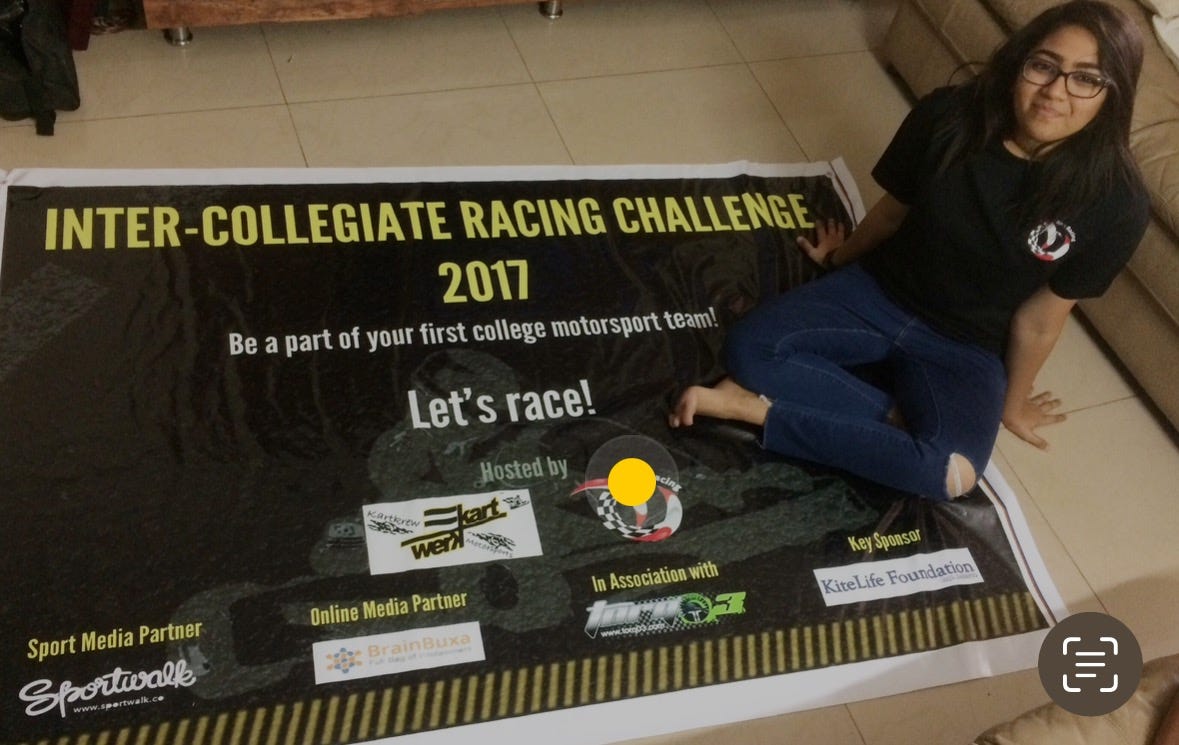
Ananya’s earliest memory of motorsports traces back to her dad reading Schumacher-in-Red newspaper headlines aloud. While she hasn’t missed a Formula 1 season since 2008, her passion for racing truly ignited when she tried go-karting. Even at local, independent events where she was often the only girl on the grid, that reality never dulled her drive to race.
“Honestly, I observed that I was the only girl on the grid, the only girl spending weekends watching races, or talking about it in school. However, I never focused on that aspect of what I enjoyed,” said Ananya. “When I was on track, I didn’t care who I was racing against. Off-track, I share the industry with others. I take every win as a proper win, and a loss as any other loss someone else would have.”
Though a professional racing career wasn’t feasible, Ananya never stopped chasing her vision. Arcs Racing became her first real exposure to the business side of the sport — navigating money, decision-makers, sponsors, and people paying for an experience.
Working closely with Ali YH, team principal of Kartkrew Motorsports, she learned not only how to operate within Indian motorsports but also how to do so with empathy and ethics. Little did she know that learning how to treat a driver paying for track time or someone chasing a dream they could barely afford would become the foundation Hairpin Media was built on.
While Arcs Racing grounded her in the business, SportWalk kept Ananya connected to the bigger picture. Reporting on Formula 1 across different editorial teams for nearly five years trained a different muscle, one that would also be useful to her work at Hairpin Media.
Starting Hairpin Media
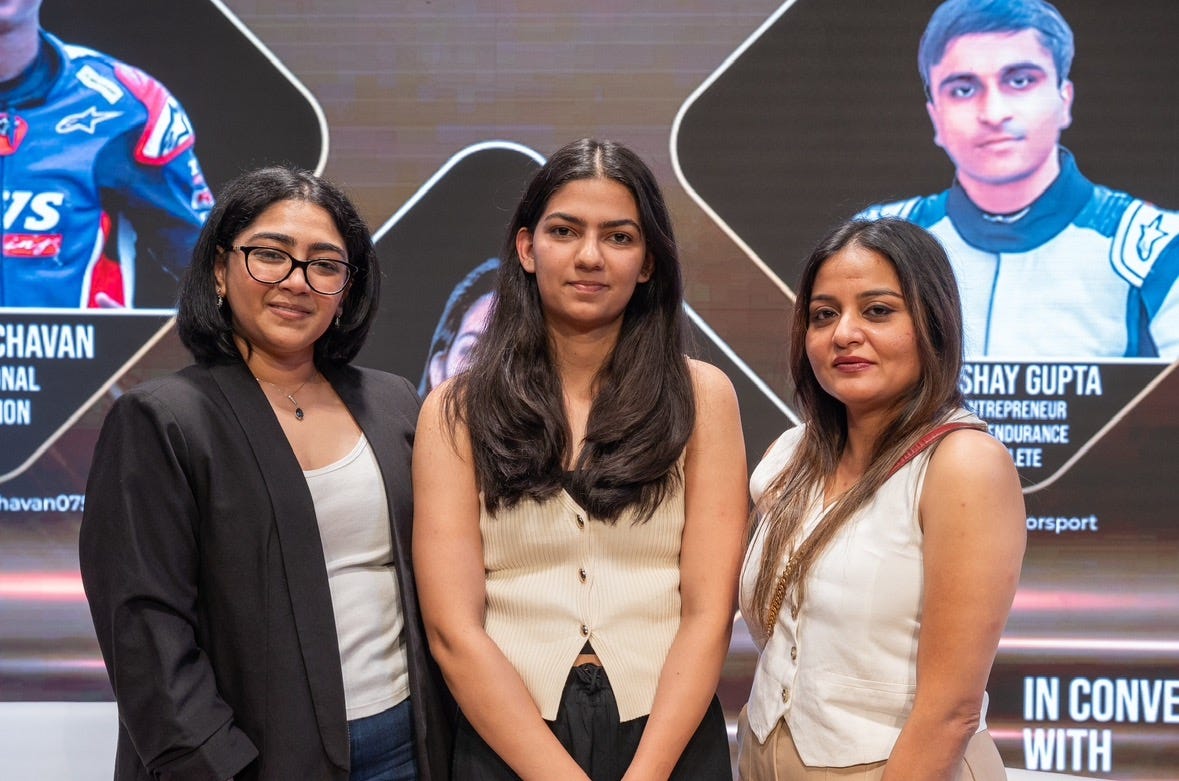
While racing was her passion, Ananya took a different path upon graduating from college. Stepping into the corporate world before returning to motorsports gave her the foundations she needed to build Hairpin Media.
“A stint in the corporate world taught me process, discipline and big thinking. These, I believe, are fundamentals that develop you as a founder.”
Co-founding Hairpin Media, however, was about chasing a much bigger vision. To address the lack of visibility for Asian talent, the company was built to solve a specific piece of the equation: capturing the data and stories behind Asian motorsports. Today, Hairpin does far more — its sister brands allow the team to work across a wider range of sports and sectors.
The Challenges For Women To Break Into the Asian Motorsport Industry
Research by More Than Equal highlights a stark participation and performance gap across all categories of motorsport. Women make up just 10% of participants on average, peaking at 13% in karting before plummeting to a mere 7% in Formula and GT Racing.
Addressing the lack of female representation in Asia, Ananya shares:
“Where I think the real bias lives is off-track, and that part is documented across all sports. Sponsorship decisions, investment risk assessments, the assumptions made before a female driver even gets to show what she can do in a car — that’s where the system gives women a hard time.”
It ultimately comes down to equal access to opportunity. According to Ananya, a male and female driver with identical results and career trajectories will rarely receive the same financial backing from a sponsor.
Then, there’s the cost. Competitiveness in a race car directly correlates to track time, which is inevitably proportional to money spent. Beyond financial commitments, young Asian drivers aspiring to climb the single-seater ladder must also navigate immense personal sacrifices. Think skipping school, funding race-specific training, travel, equipment, and testing — all for the reward of a few Super License points.
“If you win, the risk is that you will need to commit the same way year after year in the hope that either a sponsor finds your journey inspiring or an F1 Team Academy is watching. Both are as good as finding a needle in a haystack.”
Globally, female athletes secure just a fraction of motorsport sponsorship dollars. Add in a racing landscape that remains heavily Euro-centric, and female drivers in Asia face an even steeper climb to attract financial backing.
“It is also far harder to convince a neutral, non-female brand to put in ad dollars into a woman in sport compared to banking on a male athlete. That’s now slowly shifting for the better and we’ve seen it with Kareen. However, not as rapidly as we would like it.”
The Future of Women Racing in Asia and Beyond
Throughout the sport’s history, none of the 28 Asian drivers to race in Formula 1 has been a woman. The five women who have participated in a Grand Prix weekend all hailed from Europe or South Africa — underscoring the exact gap initiatives like F1 ACADEMY and the FIA are trying to bridge. Ananya sheds light on the reality for young girls pursuing a motorsports career in Asia today.
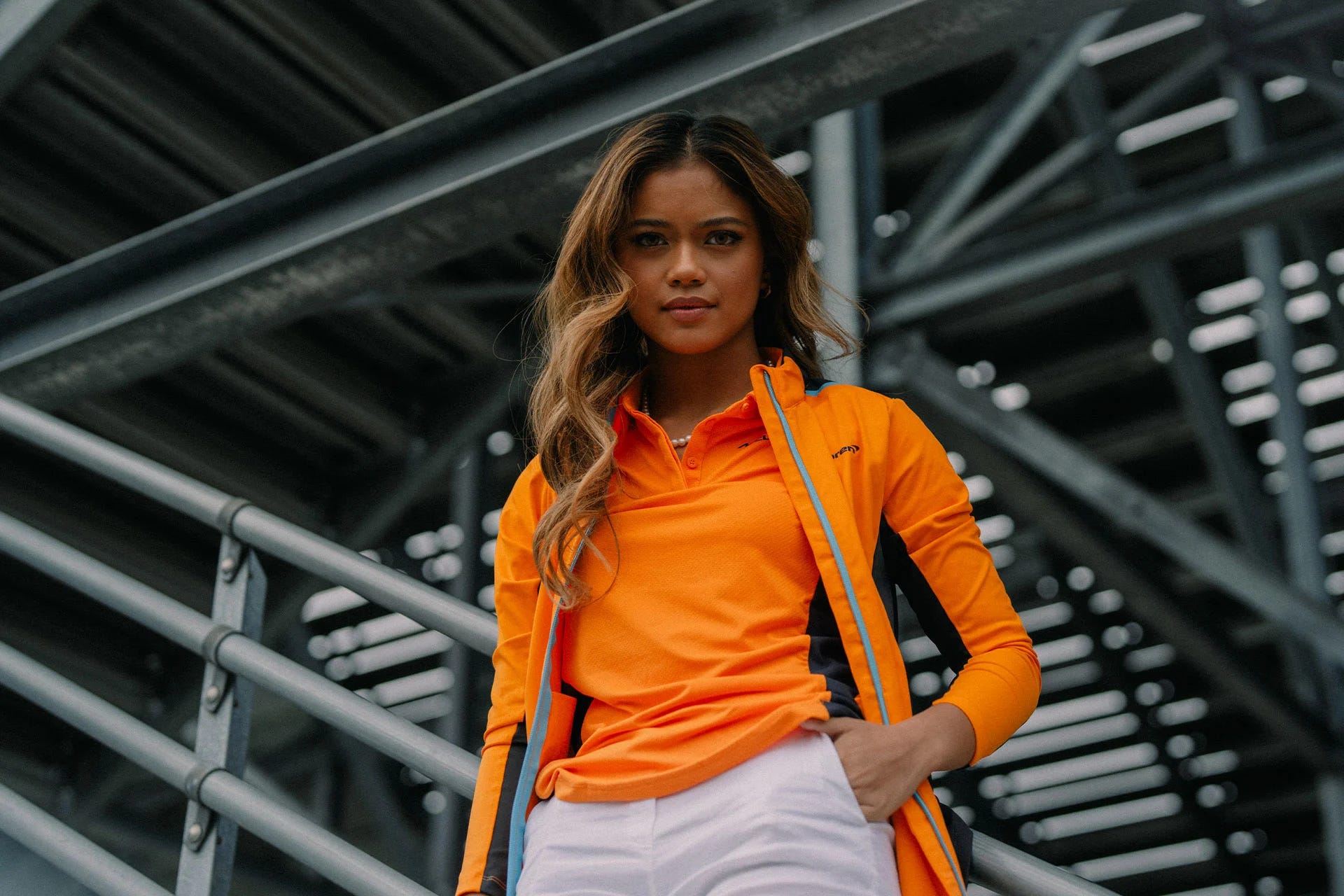
F1 Academy, created to give women a stepping stone up the single-seater ladder, hasn’t featured a locally developed Asian driver since Bianca Bustamante raced in the series for McLaren during the 2023 and 2024 season — nor has an Asian driver participated in the F1 Academy Rookie test.
“For any racing driver to be successful, they would still need to look at Europe for driver development. Even some scouting programmes for Asian championships happen in Europe.”
When evaluating current programmes designed to build the female talent pipeline, the Hairpin Media co-founder notes they still fall short in supporting young Asian drivers. More Than Equal, for instance, has operated for over three years but has only backed one Asian talent: Katrina Ee.
What concrete, structural shifts does Asian motorsports actually need to create more opportunities for women in the region?
“Government or majority state-owned multinational entities should treat motorsports the same as any other sport or athlete. There also needs to be a consistent effort made to bring international talents to Asia so our athletes have a proper benchmark.”
Ananya adds:
“I would love to see promoters put real muscle into marketing the general audience to karting races, GT races, and more — especially in countries that are in a position to host championships.”
Most importantly, audience footfall isn’t just a vanity metric, she stresses. It provides tangible value for drivers — boosting morale and translating directly into commercial leverage for securing sponsorships. Consistently strong turnouts ensure sustainable growth for the local motorsports scene, which ultimately paves the way for more Asian talent to break through.
Ultimately, the silver lining is that out on the track, nothing else matters.
“Once you are in the car, nobody is doing you any favours. A competitor wants to beat you, full stop. If anything, there’s a heightened edge when a woman is on the grid: The racing is real, the losses are real, and the wins are earned the same way anyone else earns them. That part of the equation has always been equal, in my opinion.”