



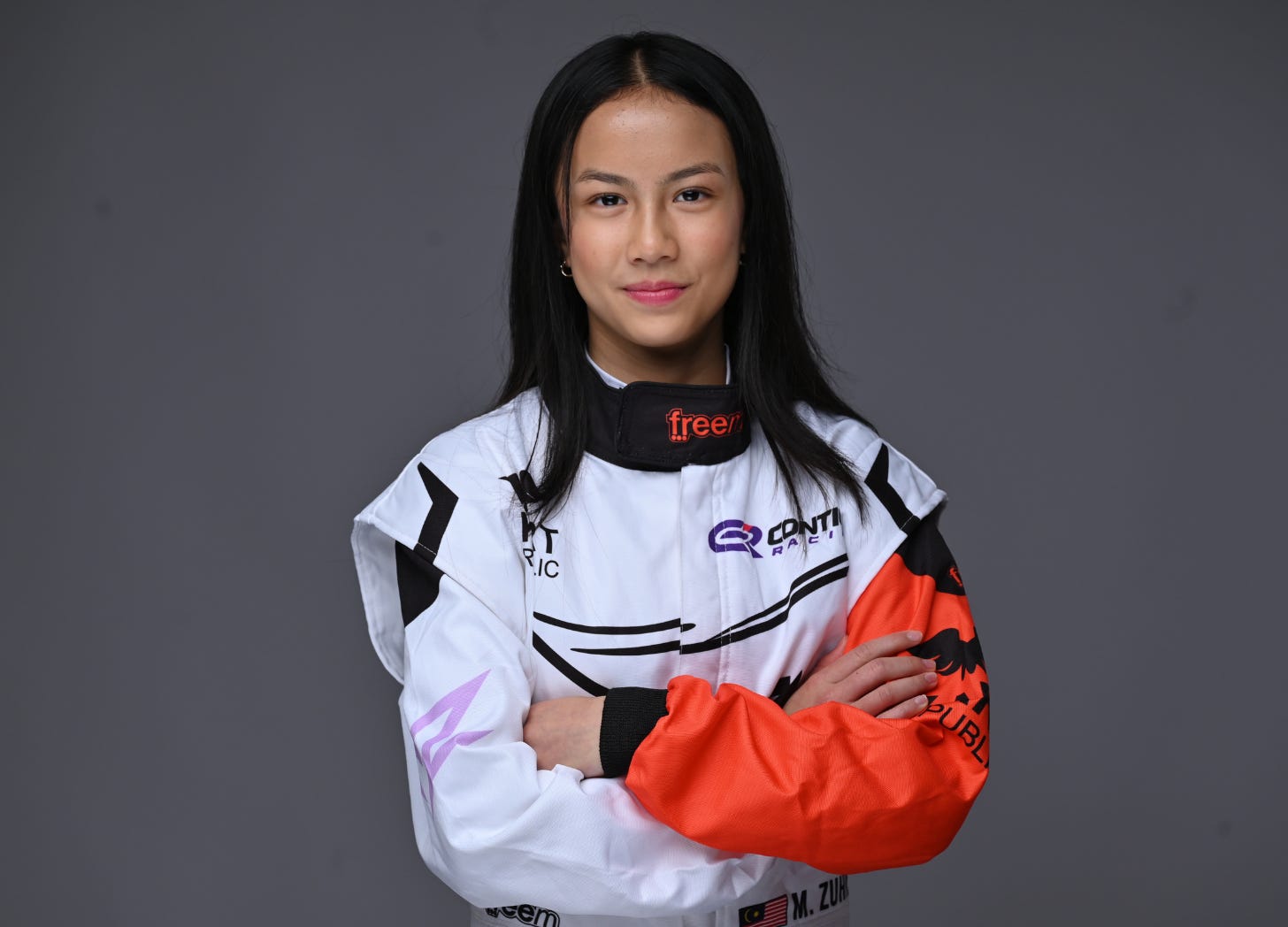
Before the race track, football was actually Maya Zuhri’s first love. The 15-year-old Malaysian started playing at five as the only girl in her school’s boys’ team in Poland.
“I went on to play for the PSG Girls Team in Dubai, U13 Camden Town WFC in London, and even represented my school in matches in Italy and Hungary,” she shares with us.
Her father’s work meant the family moved countries quite often. Each move meant starting over: a new school, a new language, and a new environment. When they moved to Spain, the language barrier made it difficult to find the right football club, especially a girls’ team for her age group.
“I missed having that familiar sporting environment where I felt I belonged. Since my father enjoys karting in his spare time, I would often accompany him on weekends,” she recalls. “I had tried recreational karting before, but this time, something just clicked.”
From then on, the rest was history. Racing on circuits across Canada, Spain, and Malaysia, she soon began her journey towards a much bigger dream: racing her way to F1 ACADEMY.
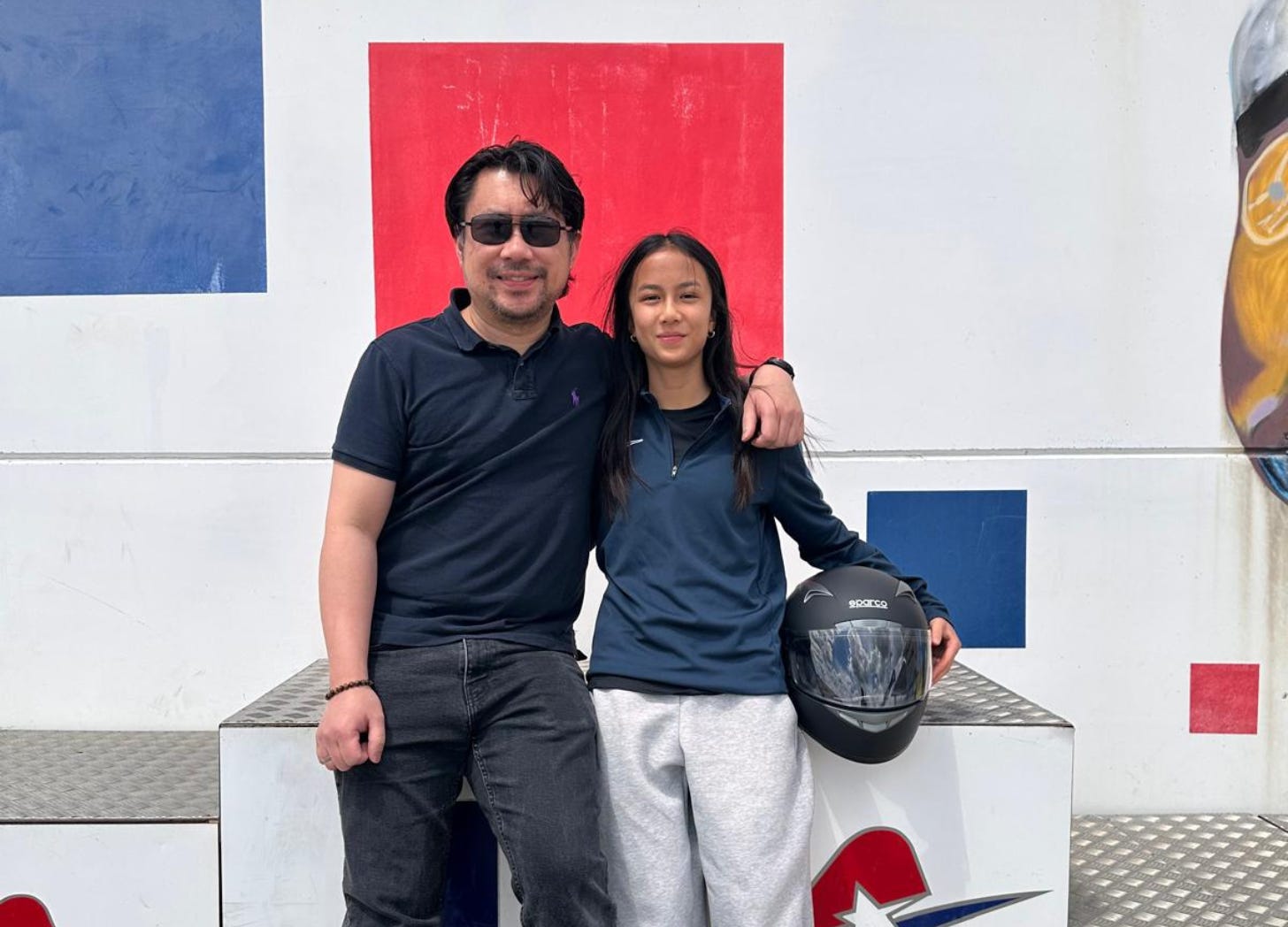
Finding Her Footing with Coach Fernando Zamit
Connecting with Fernando Zamit was a turning point in Maya’s career. The 34-year-old Spanish karting driver and coach is also the founder and director of Escuela de Kart, a four-stroke (4T) karting academy and sports club based around the Madrid region.
“What makes learning from him even more special is that he is still actively racing himself. He understands the sport from both sides: as a coach and as a driver,” Maya shares.
Communication between them isn’t always straightforward. With only a little English and Spanish between them, they bridge the gap through a mix of words, gestures, demonstrations, and the universal language of racing. It taught the young Malaysian that you don’t always need to speak the same language to understand each other.
“Although I had experience in competitive sports through football, I was completely new to the technical side of karting. There was so much to learn, from racing lines, braking points, and cornering techniques to understanding how small adjustments could affect my performance. Fernando helped me break everything down and develop my skills step by step,” she shares.
Starting karting at a later age also gave Maya a different perspective. She may not have the years of track experience that others do, but coming from competitive football meant the discipline, competition, and pressure already felt familiar.
“Being a little older has helped me approach racing with more maturity. I am also learning to not just reach to what happens around me, but to think ahead, read other drivers and calculate when is the right moment to overtake.”
While the technical side of karting presented a steep learning curve for the 15-year-old, Fernando showed her that raw pace is only the beginning. Talent needs to be backed by discipline, consistency, and a willingness to learn.
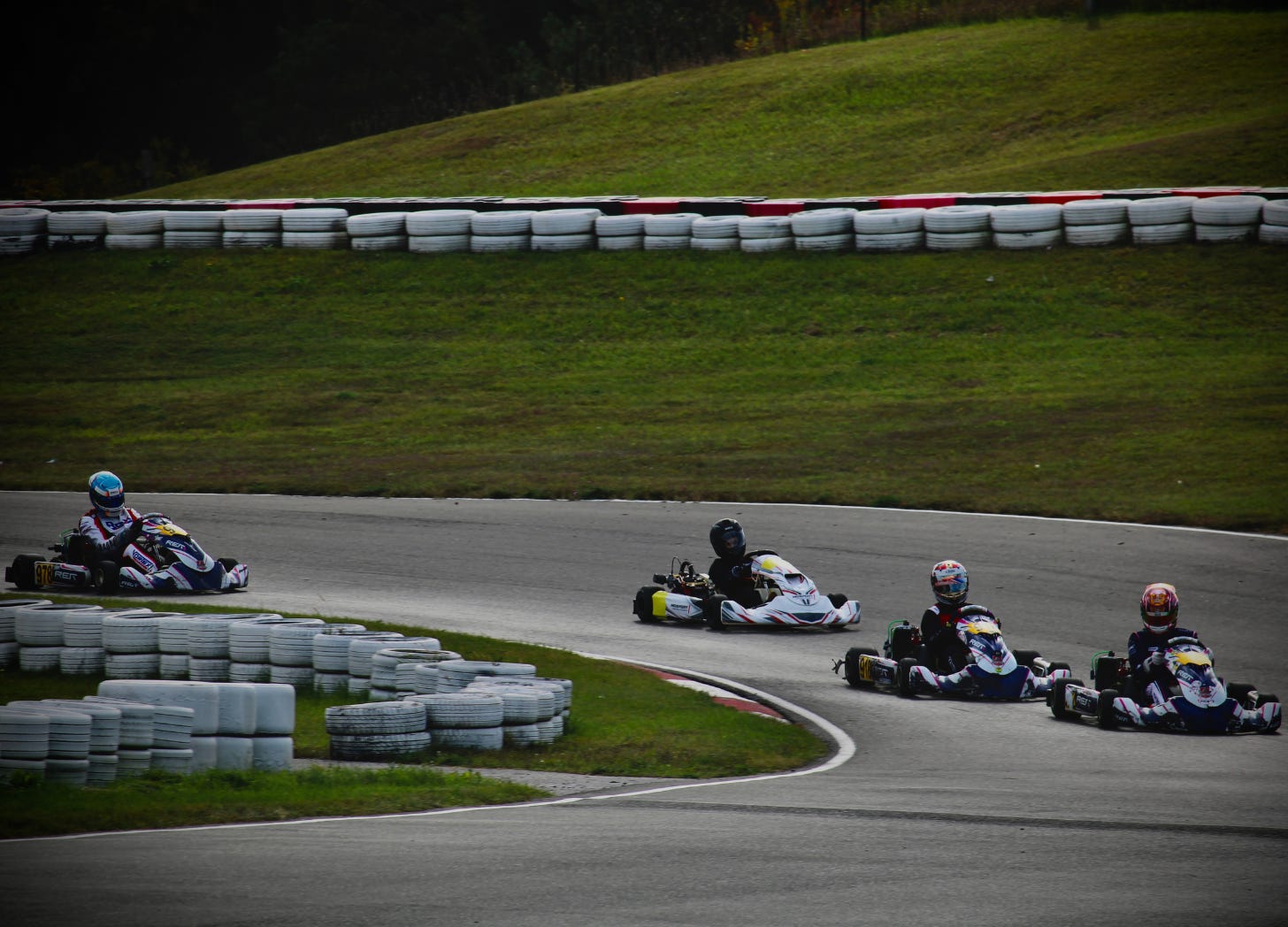
How Racing In Different Countries Built Her Racecraft
Racing across Spain, Malaysia, and Canada in a single year is a path we rarely see in junior karting. With every new kart and track, Maya had to adapt both mentally and physically to her surroundings: the climate, conditions, atmosphere, competition, and even the people around her.
Moving between countries frequently at a young age helped her develop a sense of adaptability that extends far beyond racing.
“I’m used to entering new environments, meeting new people and finding my feet in unfamiliar situations.”
It all translates into results on track. Her 2026 race record shows a clear pattern: almost every time she lines up on the grid, she finishes higher than she started, including gaining four spots at both LYL Karting Circuit (P7 to P3) and the MADRL Championship Final (P16 to P12).
“In the opening laps, I try to stay calm, focused, and observant. My focus is not just on overtaking the driver in front of me, but rather on reading the whole pack, studying their racing lines, braking points, and how they defend their positions. I try to understand where their strengths and weaknesses lie and where I might find an opportunity,” she shares.
This December, Maya heads to the FLKC Florida Winter Tour before returning home for the IAME Asia Pacific Games at Sepang in January. As she prepares for these upcoming events on her Charles Leclerc chassis, one of her biggest technical priorities is deepening her understanding of the kart and learning how to extract the most out of it.
“I’m working on my braking points, especially braking release, because how smoothly you release the brakes can make a big difference as it’ll have a big impact on the kart’s balance, front-end grip and how much speed you can carry through a corner. I am also working on qualifying pace, where every lap matters and there is very little room for mistakes.”
She knows these events will pose a bigger challenge and wants to learn, gain experience, and measure herself against a stronger international field. Her goal is to arrive prepared, stay focused, and give her best performance.
The Journey To F1 ACADEMY
With her rapid progression in karting, there are plenty of routes into professional motorsport Maya could pursue, from GT racing to endurance prototypes. Yet, her heart is set specifically on open-wheel single-seaters.
“I’ve always been drawn to single-seaters because of the speed, precision, and technical challenge. My ultimate vision is to compete in F1 ACADEMY, the all-female single-seater racing series, and eventually build a career in professional motorsport,” she shares.
The next step on that road is getting behind the wheel of a Formula 4 car for private testing in 2027. To prepare, she is using her current karting season to build a strong technical foundation, studying onboard footage to see where she is gaining or losing time, how the tyres behave, and how gearing affects performance.
“I know Formula 4 will be a completely different experience, especially with aerodynamic downforce and slick tyres. But I believe developing these habits now will help me understand the car more quickly.”
Looking five years ahead, Maya hopes to graduate from F1 ACADEMY into higher-tier single-seater championships on the international stage. “I know the journey is demanding, but I want to keep pushing my limits and see how far I can take the dream,” she shares.
Navigating The Challenge Of A Motorsports Career At 15
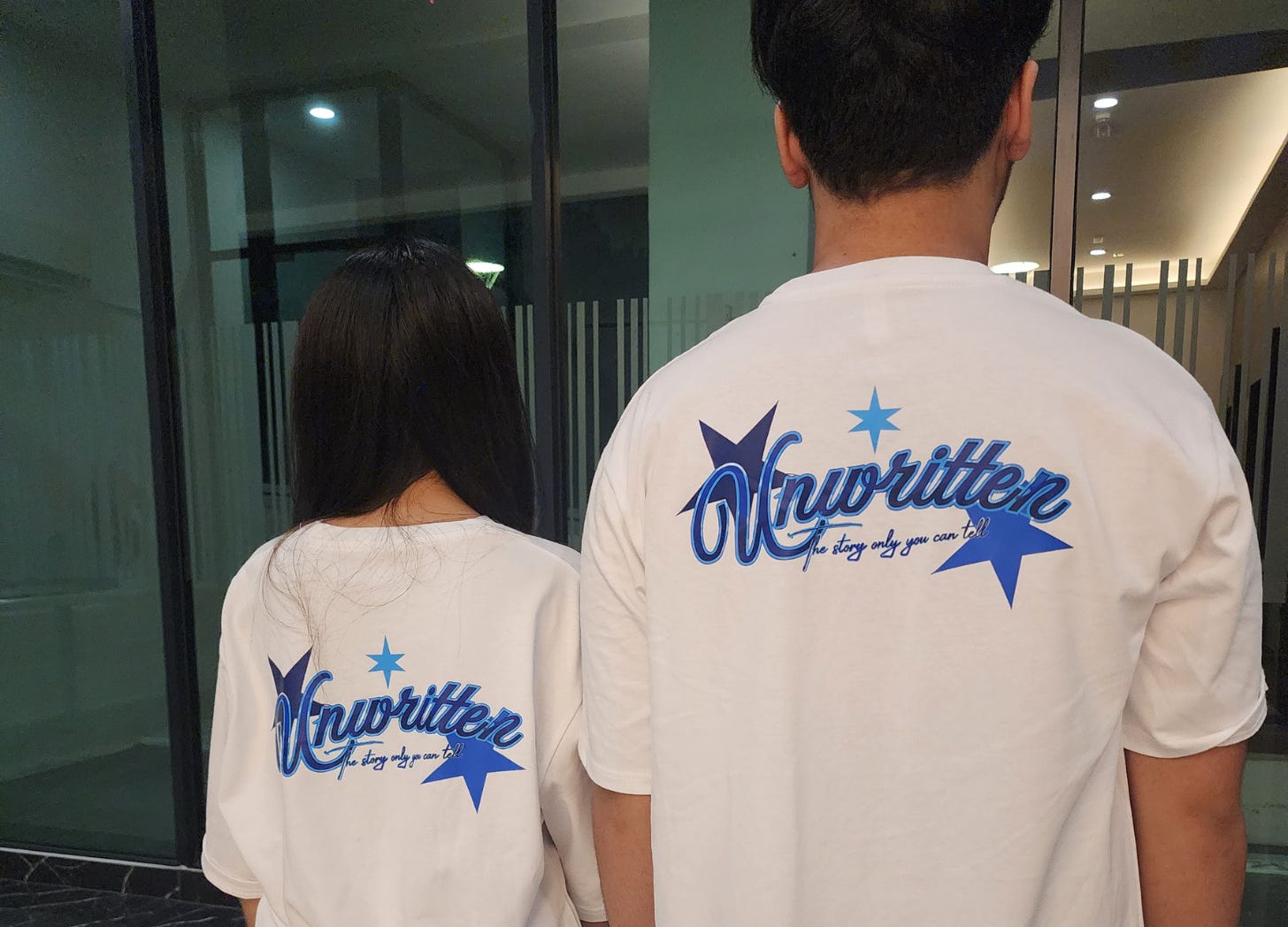
At 15, Maya is learning that being a racing driver is about much more than what happens on track. She is balancing school, travel, training, managing her socials, and hunting for new opportunities to race. As she puts it, it feels almost like having two jobs: being a driver and managing the business side of her racing journey.
“My clothing line and fundraising projects help me contribute to my own karting piggy bank. I’m also working with Contigo Racing on a newly launched platform called ContigoDrive.com, a collaboration hub that brings together information from drivers, circuits, competitions and the wider karting community,” she says.
Recently, she celebrated the beginning of her journey with Stile Corsa, a clothing brand, through its Driver Ambassador Programme.
To stay grounded, Maya does her best to keep her on-track and off-track responsibilities separate, making time for life outside racing so her world doesn’t revolve entirely around results.
“When I put the helmet on, I want to switch off from everything else and enjoy driving.”
When asked what kind of support from the FIA, local federations, or academies would truly move the needle at her current stage, she points to financial backing at the grassroots level, especially for drivers who have the ability and determination to compete internationally, but not necessarily the budget.
“At the moment, my family funds my racing 100%, so every opportunity to compete involves careful planning and financial sacrifices. We also actively look for sponsors and find ways to raise funds, but the costs of international karting, from race entries and equipment to tyres, testing, travel and accommodation, add up very quickly.”
Support through scholarships, sponsorship programmes, or grants covering even part of an international season would make a huge difference. She also believes national federations and academies could do more to spot promising young talent early and build clearer pathways from national karting into international competition.
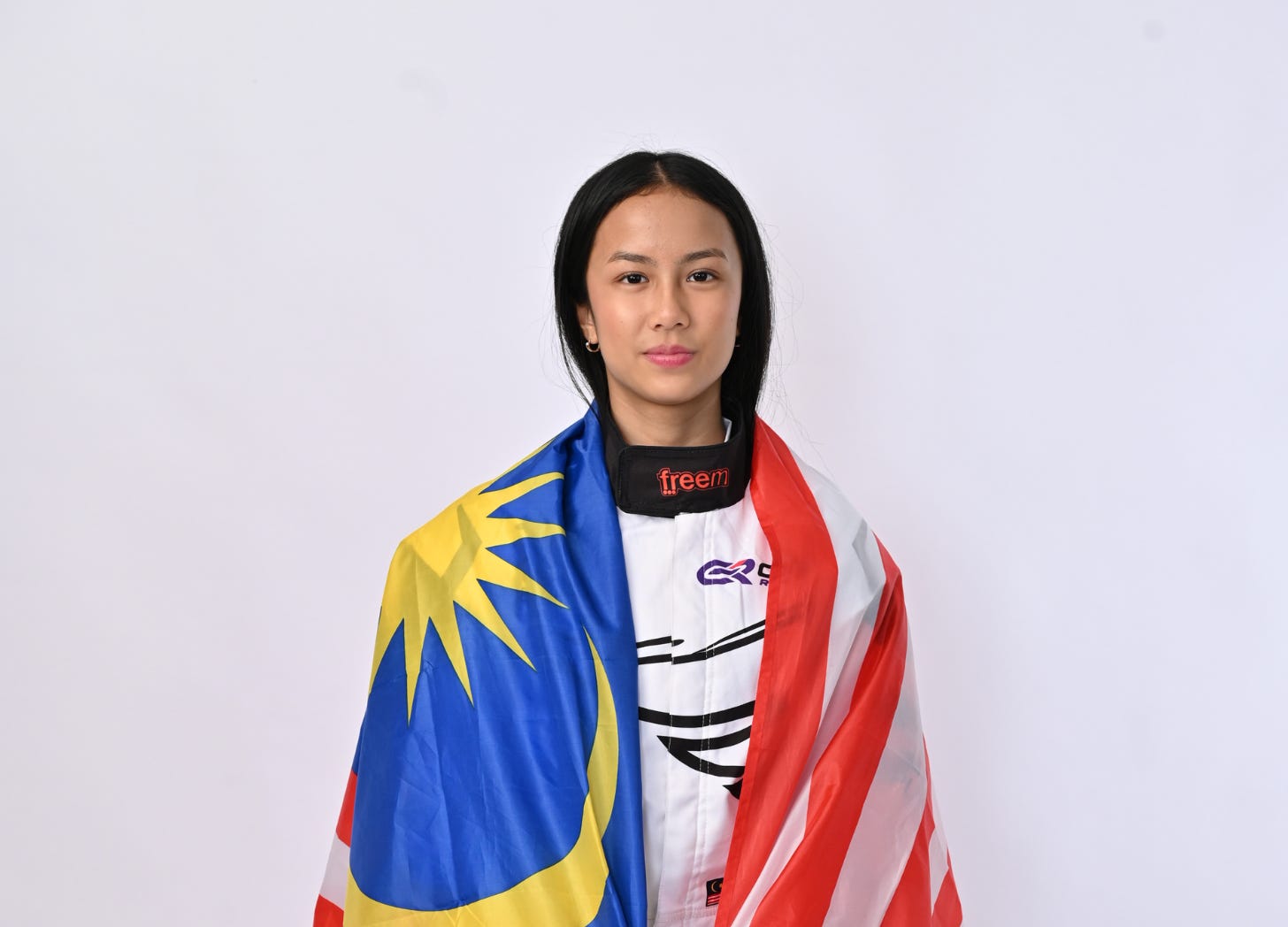
Ultimately, flying the Malaysian flag at circuits where she is often the only Malaysian and one of the only girls on the grid, Maya races for herself, her family, her team, and her country.
“Even though I’ve grown up in different countries, I’m proud to carry the Malaysian flag wherever I compete. I also race for every girl who dreams of being in motorsport but doesn’t see many people like herself on the starting grid,” she shares.
“Most importantly, I race because I genuinely love it. Every time I put my helmet on, I remind myself of how far I’ve come, the sacrifices my family has made and the dream I’m working towards. I wear number 15, carry the Malaysian flag and give every race my best.”